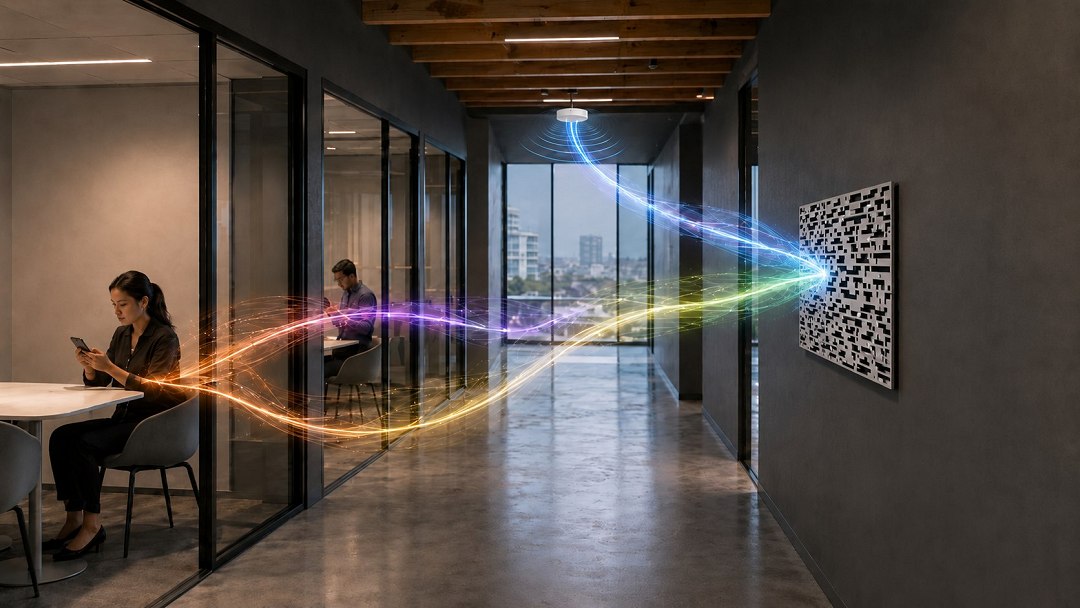
Metacristal
First came the metamaterials, then the metasurfaces, and now we have arrived at the metacrystals.
They are all different versions of artificial materials whose building blocks manipulate waves in ways that no natural material can.
Mohammad Asgari and colleagues at Aalto University in Finland have taken this wave manipulation technology to the next level, reaching 3D and creating a much more powerful and versatile version.
The result is metacrystals, panels designed to redirect radio waves around obstacles and toward users, offering a low-cost way to improve indoor or outdoor wireless coverage without the need for new base stations, repeaters, or wiring – the panel can be installed on the wall, ceiling, or wherever is most convenient.
Furthermore, metacrystals are passive smart panels, meaning they don’t require electrical power or batteries. And they are 3D printed, which makes the technology very inexpensive.
“When an environment is too dark, you can add more lamps or use simple mirrors to direct the light already available. That’s what these metacrystals do, but with radio waves,” Asgari explained. “Unlike previously proposed single-layer smart surfaces, these volumetric metacrystals can be designed to independently control multiple input signals or frequency bands – a fundamental requirement for viable wireless communication.”
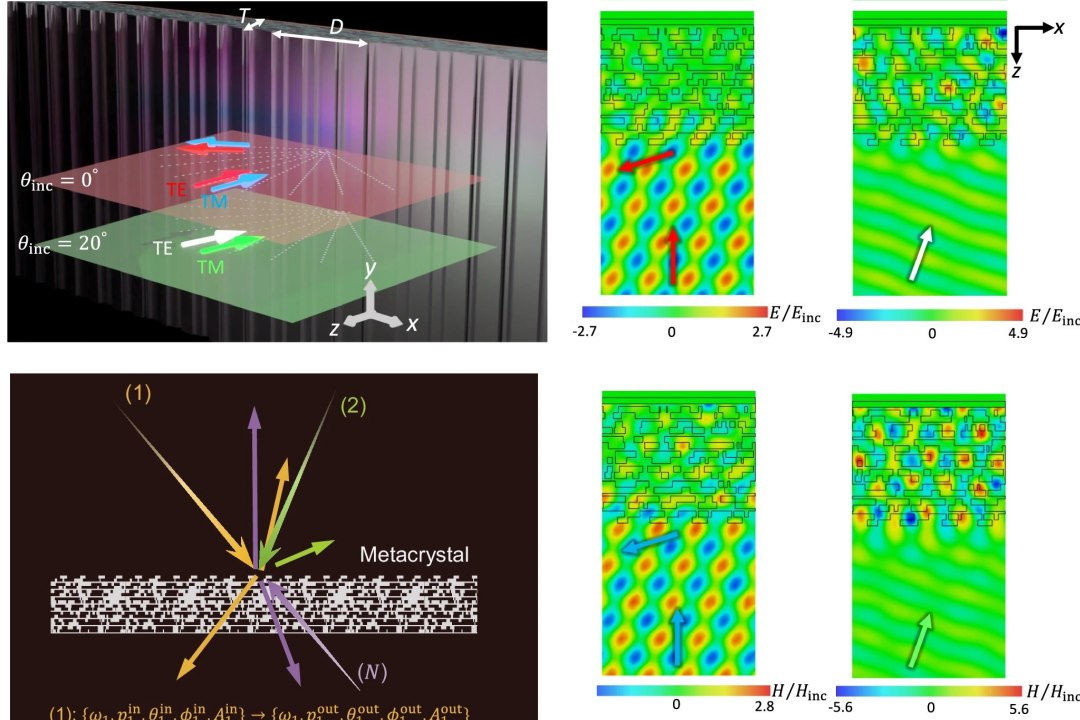
[Image: Mohammad M. Asgari et al. – 10.1038/s41467-026-73019-x]
Passive, inexpensive, and versatile.
Other technologies allow for the construction of reconfigurable surfaces using antennas, but this requires many adjustable elements and complex control circuits, making the solution very expensive and difficult to implement on a large scale. Metacrystal panels, on the other hand, can be manufactured using 3D printing, which not only drastically reduces the cost but also makes the technology very versatile, allowing for the creation of customized panels for specific environments, rather than a universal device.
“For industry, the most attractive use cases are static or slowly changing environments, such as factories, indoor 5G/6G networks, warehouses, and long corridors,” says Asgari. “In these locations, a passive panel designed for a known layout can be much cheaper and simpler than an actively controlled surface, which requires continuous maintenance.”
But the team is already planning to go further, moving from static panels to reconfigurable panels that can adapt to changes in the environment. They are also looking for partners to commercialize the technology, which could be extended to other applications, including programmable metasurfaces, smart wireless infrastructures, and passive signal control technologies.
“The expectation is that, in the future, we will see these intelligent and scalable wireless environments being applied in practice in indoor spaces and outdoor urban environments,” Asgari concluded.
Source: www.inovacaotecnologica.com.br
Source link