Artificial medicinal leaf
Plants efficiently convert light into energy through photosynthesis, a capability that scientists and engineers are striving to mimic using various approaches in attempts to develop so-called artificial photosynthesis.
The main tool in this field is tiny metallic structures designed to absorb and concentrate light energy and generate the appropriate charge carriers, known as surface plasmons.
What happens is that when light hits the surface of metals, it produces a ripple of electrons on the surface of the material, waves that can be precisely controlled. These ripples – plasmons – gave rise to plasmonics, which is why it is also known as “light through wires”.
Now, Pengju Li and colleagues at the University of Chicago in the US have used this principle to create a “plasmonic sheet,” a bioelectronic device that captures light energy and makes it directly usable to stimulate “things” in the human body, which can range from living nerves damaged by some disease to pacemakers and other biomedical devices.
“These materials are very unique and different from other photosensitive devices, such as photovoltaics,” Li explained. “Through our project, we have increased the ability of these nanostructures to store energy, so they can now potentially be used as new forms of therapy and in new human-computer interfaces.”
[Image: Pengju Li et al. – 10.1038/s41566-026-01949-5]
A new type of bioelectronics
Light-harvesting devices, such as solar cells, use semiconductor materials to convert sunlight into electricity. However, these materials have efficiency limits due to the laws of physics.
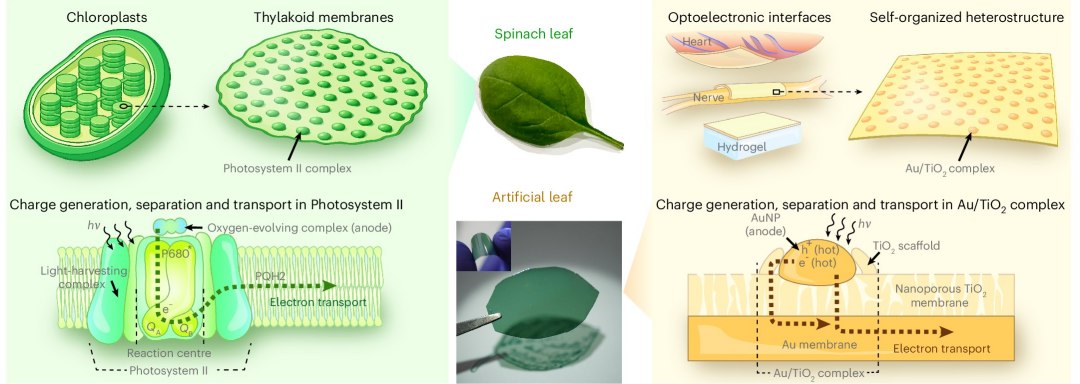
Nanoscale plasmonic components, or nanoplasmonics, can be more efficient, as is the case with the well-known artificial leaves. These materials are made of noble metals, such as gold or platinum group relatives. The metal is combined with titanium dioxide in tiny nanostructures – about 15 nanometers – that absorb light.
Light generates surface plasmons, which then decompose into electrons and holes, called hot carriers due to their high energy, allowing the control of electrical and chemical processes at the nanoscale. Nanoplasmonic components essentially function as tiny energy converters, providing electrical energy without the need for wired power supplies.
What the team has now achieved is finding a way to use the component itself to amplify this energy, paving the way for its practical use, not only in medical devices through bioelectronics, but even in emerging alternative computing platforms.
In the case of biomedical applications, the team has already demonstrated using its component to control the heartbeats of a laboratory animal, using only light to control the experimental cardiac implant. Another implant was also tested on the sciatic nerve: When light shone on the material, it stimulated the nerve, demonstrating a potential therapy for neuropathic pain.
[Image: Pengju Li et al. – 10.1038/s41566-026-01949-5]
Pixel-free screen
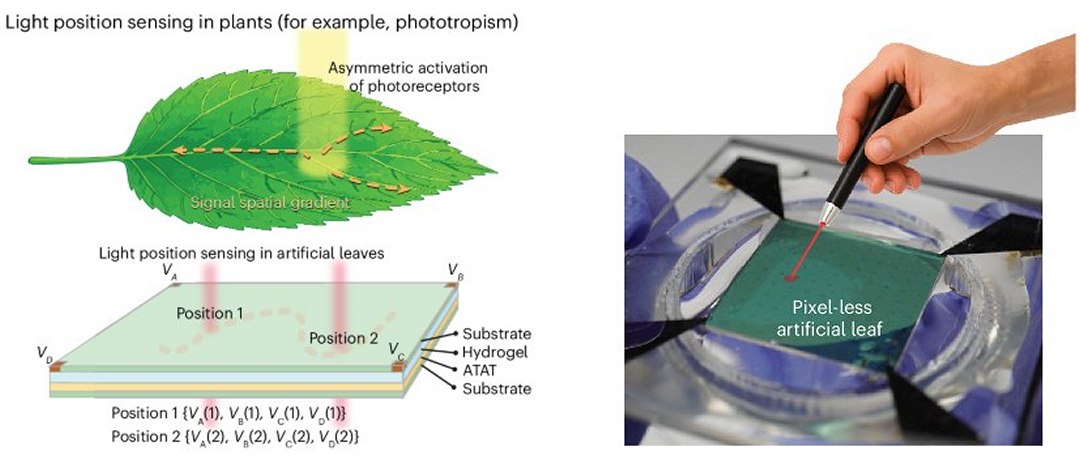
Nanoplasmonic material could also be used as a computer-like sensor platform, where users could interact with a kind of screen using light outside the visible range, a potentially safe way to transmit information.
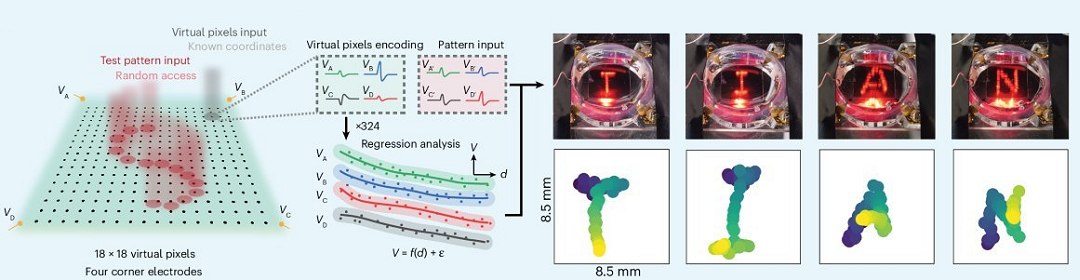
To demonstrate this optosensing capability, the team built a device similar to a touchscreen, but without pixels, that works by responding to light instead of touch. The researchers interacted with the screen using a laser pen and then used an artificial intelligence program to reconstruct the projected patterns.
“A device like this could change the way people interact with computers,” said Li. “Instead of using touch, you could use light to input certain information. And the light could be invisible, which would improve security. AI could then be used to decode what you’ve written. This opens up new possibilities for our material.”
Returning to the healthcare field, the team will now focus on developing a fully implantable device that can be used for biostimulation for a year or more, paving the way for its clinical use.
Source: www.inovacaotecnologica.com.br
Source link