Metasurface solar panel
Although still a relatively unknown technology to the public, it is difficult to overstate the impact of metamaterials and, more recently, metasurfaces, revolutionary artificial materials composed of nanostructures that can focus, deflect, twist, and even bend waves, especially electromagnetic waves such as radio and light waves.
Progress is rapid, and soon programmable metasurfaces have emerged , now also known as “programmable smart surfaces” or hypersurfaces, far more versatile than the originals, which only manipulated the waves for which they were initially designed.
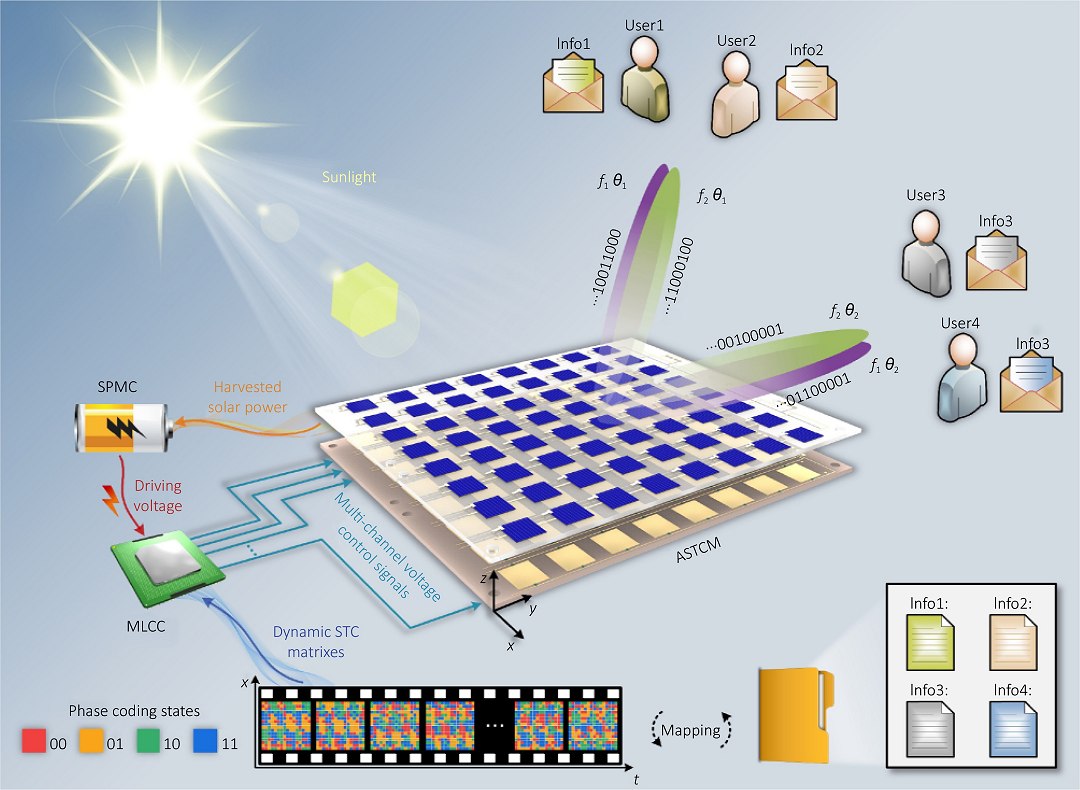
Currently, programmable metasurfaces are rapidly advancing in the field of wireless communications, and can be divided into two main categories: (1) passive relay surfaces, which optimize signal quality through spatially programmed beam generation, and (2) simple architecture wireless communication systems, which directly modulate information in reflected waves.
Examples include panels that direct communication signals through complex environments , adjustable flat lenses, qubit manipulators for quantum computers, and new bioelectronic medical devices, but the list of demonstrations grows every day.
But programmability came at a cost: While traditional metasurfaces are passive structures, meaning they don’t need a power supply, programmable metasurfaces only work with external electricity sources, which eliminated much of the advantages of simplicity, low cost, size, and scalability.
Spatiotemporal encoding
There’s plenty of energy left over.
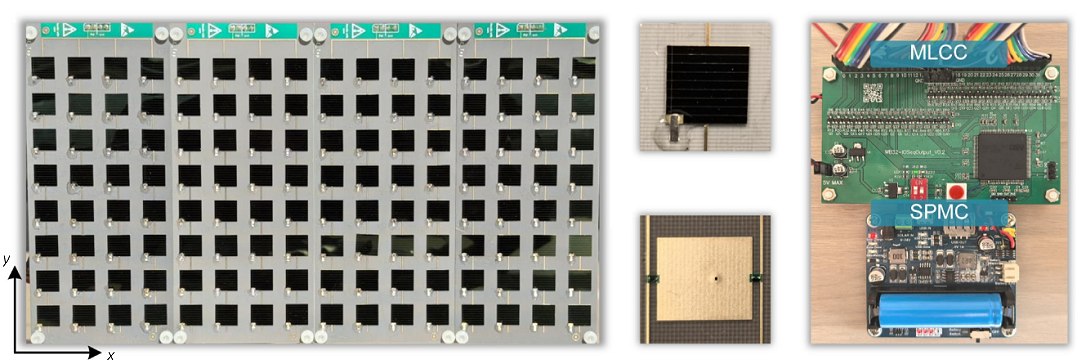
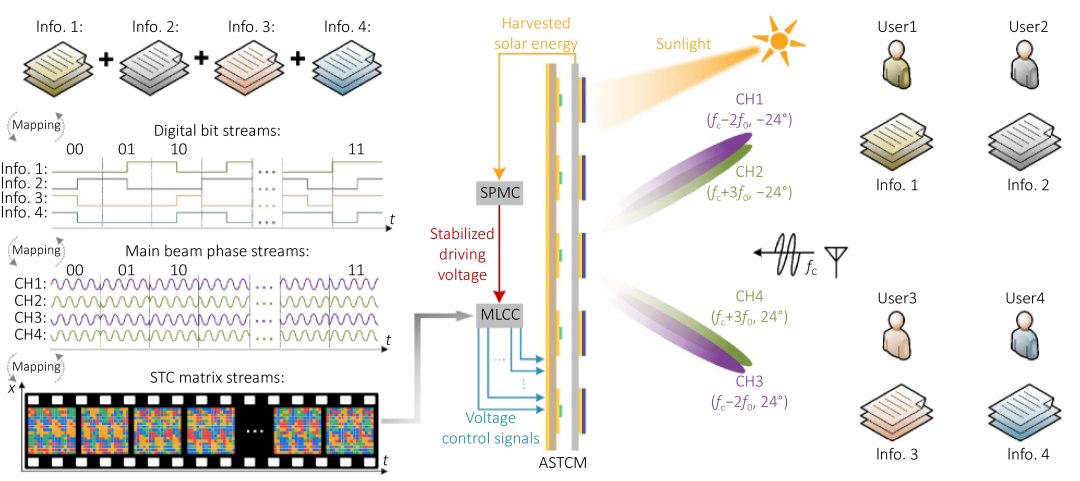
As a proof of concept, the team built a four-channel wireless communication system, self-powered by ambient light, which achieved high efficiency in different directions of propagation of the communication beams. The experimental system was able to simultaneously transmit, independently and in real time, four different image information streams to four user terminals, with a power consumption of only 17.4 mW/bit.
The energy efficiency is so high that a lot of energy was left over. The panel managed to capture up to 12 mW/cm² of solar energy from the environment, exceeding its own energy consumption by almost 20 times (only 0.66 mW/cm² ) . A simple estimate shows that, under a standard solar irradiance of 100 mW/cm² , the solar-powered metasurface can capture in 1.3 hours all the electricity needed to guarantee its continuous operation for 24 hours.
Source: www.inovacaotecnologica.com.br
Source link