Apple integrates AI into Siri. Image: Reproduction/website
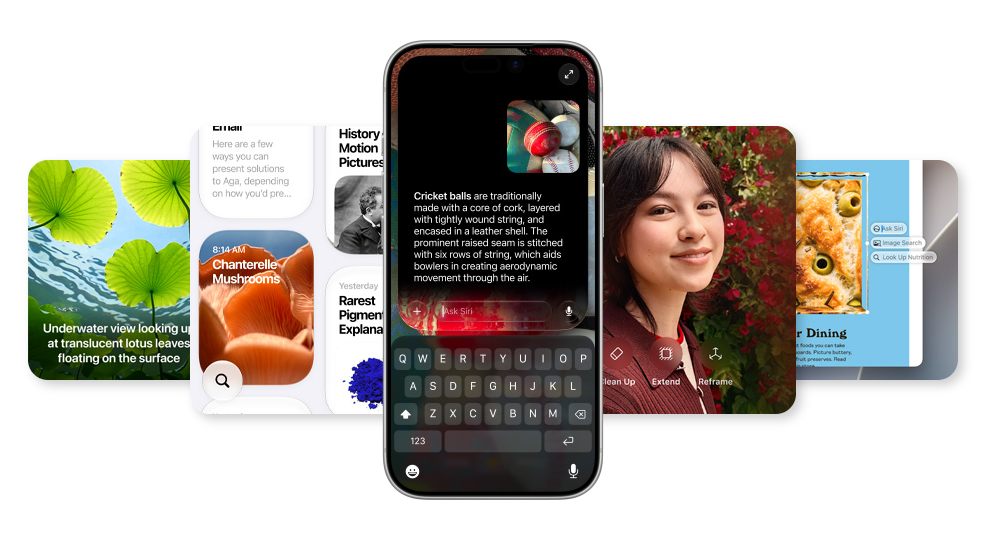
Apple unveiled this Monday a new version of the digital assistant Siri equipped with artificial intelligence and capable of analyzing what appears on the device’s screen and searching for more information on the internet.
Called “Siri AI,” the software will also have its own dedicated app, Apple said during the company’s Worldwide Developers Conference (WWDC), held at the company’s headquarters in Cupertino, California.
Siri AI has what Apple calls “broad knowledge of the world,” which allows it to present the user with more details about the internet in response to a query.
Users will also be able to look up a previous conversation with Siri and the assistant will be able to find information such as a friend’s address sent in a message, even if that information has not been formally saved, Apple executives said.
“Truly useful AI must be centered around you and your needs,” said Craig Federighi, head of software at Apple. “That means integrating AI deeply into the products you use every day, grounding it in your personal context and the apps you depend on, and designing it with privacy at every step. That’s our vision for Apple Intelligence.”
Apple Chief Executive Tim Cook said this year’s WWDC will focus on Apple Intelligence and Siri.
“AI is an incredibly powerful technology, with the potential to shape society in profound ways and, with due care, bring significant benefits to people everywhere. Yet some seem to be racing ahead, seemingly pursuing AI for AI’s sake, without clear consideration for people,” Federighi said.
Apple’s new iOS 27 operating system will be compatible with iPhone 11 models, the company said, adding that the next version of MacOS will be called “Golden Gate”.
Apple AI Challenge
Apple has been seeking to close the gap with rivals like Microsoft and Alphabet’s Google, which have moved faster in incorporating AI “agents” — software capable of performing complex tasks — into everyday computing.
The question is how far Apple is willing to go. The company has long maintained tight control over its software and user data, and has taken a cautious approach to AI, relying in part on partnerships, including with Google’s Gemini models, to drive new features.
This caution contrasts with competitors betting on AI agents that could eventually replace traditional apps and reshape the way people use their devices. Rivals like Microsoft have hinted at a future in which AI “agents” replace traditional operating systems and applications, and Nvidia is working with PC makers to offer laptops that compete directly with Apple’s own high-end MacBooks.
“Agents are key as they can become the primary touchpoint in how consumers interact with their devices,” said Tarun Pathak, research director at Counterpoint Research. “The era of agentic AI could play out very differently than we imagine, but it’s too big a risk to pass up, and Apple needs to act quickly.”
Apple Strategy
Apple’s more cautious approach, however, has so far seen the company avoid the massive investments in data centers seen at competitors. But now the company may be changing course, with Chief Financial Officer Kevan Parekh saying on Apple’s latest earnings call that the company will end its long-standing goal of returning excess cash directly to shareholders, signaling room for greater investment.
But in the AI race, Apple has something few of its competitors have: powerful chips in many of its phones and laptops that can run AI agents for free, because consumers have already paid for the computing power when they buy the device. Apple also has a huge trove of personal data stored on iPhones.
Source: www.moneytimes.com.br
Source link