Dante Alighieri’s Inferno, the first part of the Divine Comedy, is perhaps not just one of the most important poems in Western literature. According to a new study presented at EGU General Assembly 2026 in Vienna, the Florentine poet anticipated the concepts of modern meteoritics by 500 years — the science that studies the impact of celestial bodies on Earth.
Continues after advertising
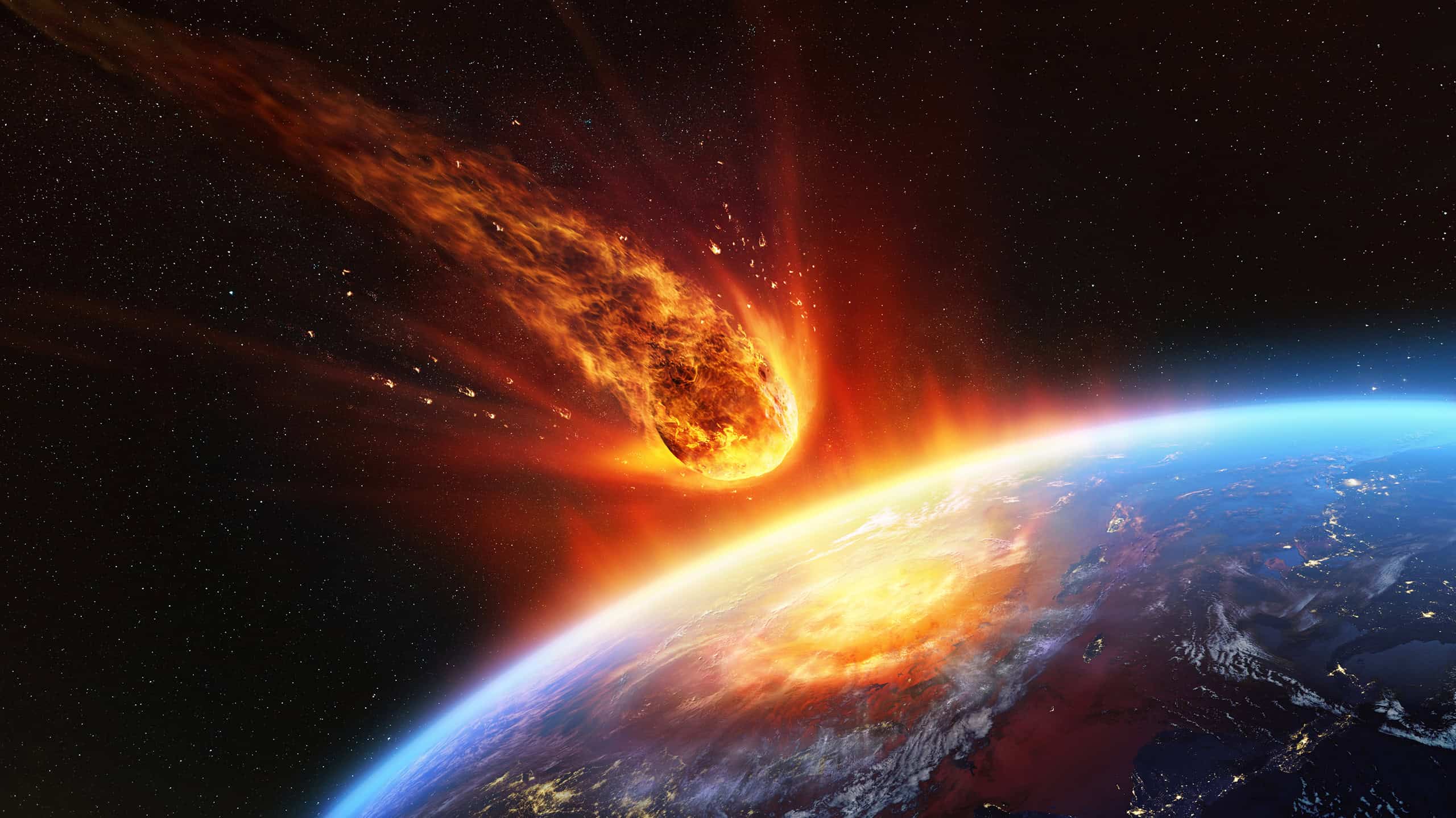
Timothy Burbery, from Marshall University (West Virginia, USA), proposed an unusual reading of the fall of Satan described in the work. Instead of a spiritual tragedy, the researcher sees the report of a high-speed planetary impact: Lucifer would be an oblong impactor, the size of an asteroid and comparable to the interstellar object Oumuamua, which collides with the Southern Hemisphere and makes its way to the center of the Earth.
An extinction event
The magnitude of the collision, according to Burbery, is equivalent to that of the asteroid Chicxulub (K-Pg), which 66 million years ago decimated the dinosaurs. The force of the impact would have pushed back the Northern Hemisphere, and the displaced material would have risen to form Purgatory Mountain as a central peak — a geological structure common in large impact basins.
The nine circles of Hell, in this reading, cease to be an allegory of sin and begin to describe with remarkable precision the morphology of craters with multiple rings, such as those found on the Moon, Venus and Mars. Dante would have thus intuited the concentric and terraced geometry of these formations, anticipating concepts that science would only describe centuries later.
Why does this matter
Burbery argues that by describing Lucifer’s fall as a tangible physical event—a high-speed impact that deforms the Earth’s crust and reaches its core—Dante challenged the Aristotelian dogma that the heavens are perfect and immutable. The poet helped pave the way for the recognition that celestial bodies could be agents of geological transformation, an idea that would only be formalized with the emergence of meteoritics.
 Dante Alighieri – Image: Rebel Red Runner/Shutterstock
The study also suggests that ancient narratives may contain encoded “planetary truths,” what Burbery calls “literary geomythology.” This interdisciplinary approach could even help current planetary defense programs, by demonstrating how long humanity has recognized (albeit intuitively) the risks of extraterrestrial impacts.
The Divine Comedy, then, is not just a monument of literature — it is also a thought experiment in geophysics that science is only now beginning to fully understand.
Source: www.olhardigital.com.br
Source link