The articles from the PÚBLICO Brasil team are written in the variant of the Portuguese language used in Brazil.
Free access: download the PÚBLICO Brasil application at Android or iOS.
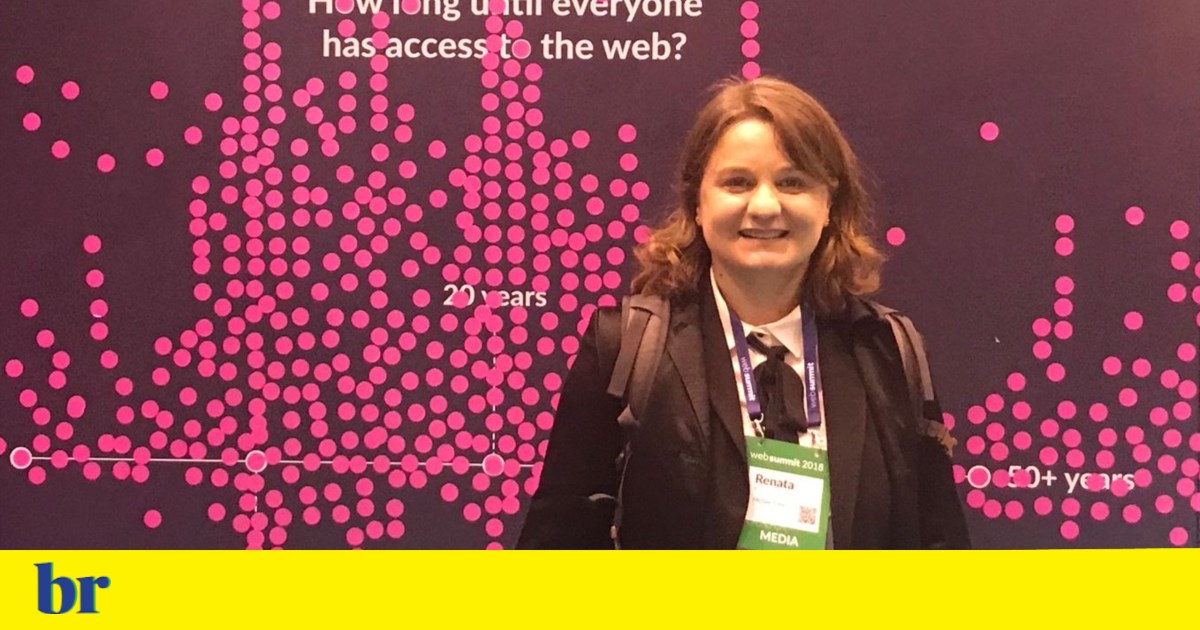
Renata Frade, from Rio, built a story that brings together technology, communication and social innovation. With a PhD in Information and Communication on Digital Platforms from the University of Aveiro and the University of Porto, in 2025, Renata is the author of systematic and comparative research on communities of women in technology in the two largest Portuguese-speaking countries in digital expression: Brazil and Portugal. The study mapped 247 communities and produced its own, tested and patented technology, capable of identifying, categorizing and connecting female networks in technological ecosystems.
She has lived in Portugal for almost ten years and works simultaneously in the academic, corporate and public markets, developing projects between the two countries and focused on technofeminism, ethics in artificial intelligence (AI) and female digital inclusion. And she works as a researcher, technology entrepreneur, consultant, trainer, content producer and author.
The work on communities of women in technology opened a new field of scientific studies on female representation in technology in Portuguese-speaking contexts and consolidated a participatory, feminist and decolonial methodology applied to the investigation of digital communities, according to her. The research also generated tools and programs for adolescents and young people in peripheral territories, such as the LitGirlsBr. She also participated as a guest to contribute to projects such as Logged in and Fiocruz Hack Girls, from the Oswaldo Cruz Foundation (Fiocruz).
Before her academic career, Renata accumulated more than 15 years of practical experience in technological entrepreneurship and digital communication. Graduated in Social Communication from Pontifical Catholic University of Rio de Janeiro (PUC-Rio)worked as a journalist, consultant and developer of digital projects for European and North American multinational companies, combining theory and practice since the beginning of her career. Still in the 1980s, in Rio de Janeiro, early contact with technology marked his childhood.
A descendant of Portuguese, she grew up surrounded by electronic games, science magazines and rare devices for the Brazilian context at the time. “I had technical curiosity, aptitude and a father who gave me access to cutting-edge technology for Brazil in the 80s. But what was encouraged in me as a professional vocation was just writing, reading, communication. It was what was expected of a middle-class Brazilian girl at the time”, reports the researcher.
At university, he experienced the emergence of the commercial internet in Brazil. “The irony came quickly. In the first year of the course, the internet opened up to Brazilian society. I had just turned 17 and, even without a computer at home, because it was expensive, I signed up for the internet course at the university’s computer lab. I was probably one of the first people to communicate online in Brazil, through the BBS program”.
International operations
Renata says that she met in Rio de Janeiro, in 2008, the North American researcher Henry Jenkins, a world reference in transmedia narrative and participatory culture. The meeting expanded its international operations. “I kept in touch with him and the team that accompanied him and was invited to participate in a multidisciplinary conference on transmedia applied to sports, law, education, literature, entertainment, at the Massachusetts Institute of Technology (MIT). These were fundamental classes for my professional career as I started to give classes, consultancies, courses, lectures and transmedia projects in Brazil and then around the world.”
The entrepreneurial spirit was evident in 2010, when he co-founded the company Punch! Communication and Technology, responsible for pioneering projects in Brazil, including one of the first interactive literary applications for iPad in the country, developed with multimedia resources, games and touch interaction.
It was also during her experience as a businesswoman that she says she faced episodes of gender discrimination in the technology sector. “I suffered prejudice because I was a woman. sometimes in prospecting meetings and presenting work to clients, especially those related to technology”, he reports.
From this context, he approached the community Girls in Tech Brazil, experience that would redefine his professional and academic trajectory. “I was welcomed to the point where I became one of the volunteer leaders for three years.” Contact with women in career transition, invisible professionals and leaders without institutional recognition led her to formulate her doctoral research.
“I mapped 247 communities in Portugal and Brazil, with 25 interviews with leaders, digital ethnography at 50 national and international events, focus groups and four in-depth case studies: Minas Programam, Geek Girls Portugal, São Paulo WiMLDS and Women in Artificial Intelligence”.
Technofeminism
According to Renata, technofeminism goes beyond the simple female presence in technology. This is a critical field that emerged from cyberfeminism and is aimed at investigating power relations, exclusion and social impact associated with contemporary technological development.
“The fourth feminist movement is called cyberfeminism and this concept emerged from it. Communities of women in technology emerged in the United States 30 years ago and around 20 years ago the first ones emerged in Brazil and Portugal simultaneously”, she states.
The researcher highlights that female communities have become central spaces for technological inclusion. “I believe that an important difference is in the scale and institutional resonance. Brazil has larger and larger communities of women in technology, with a consolidated tradition of grassroots activism articulated with structural agendas – race, class, periphery, free technical training.” As for Portugal, she points out important structural characteristics, such as the European window, and a more corporate, business orientation, aimed at developing skills for the job market.
“The two voices need each other, and that’s why I maintain research simultaneously in both countries. Being Portuguese-Brazilian, it never seemed like an academic choice to me; it’s a biographical continuity”, he adds.
Since 2021, Renata has worked as an editor and content producer for Pop Junctions websitedebating topics related to AI, technological feminism, games and digital culture with international researchers and executives. And, in 2023, he organized and co-edited the book Technofeminism: Multi and Transdisciplinary Contemporary Views on Women in Technology, published in English by UA Editora.
The work, she says, became an international reference on feminism and technology by bringing together studies on communication, artificial intelligence, design, games, human-computer interaction and social justice. “The main point of Technofeminism is simple and at the same time unprecedented: it was the first Portuguese-speaking book to systematize technofeminism from a genuinely transdisciplinary perspective.” The book already has thousands of downloads in open access and was presented at international events such as IEEE World Forum on Internet of Things, AtGender, HCI International and Universitat Pompeu Fabra.
In addition to academic production, Renata also worked as a columnist for Mídia Ninja, writing about women in technology and expanding the debate beyond the university environment. She has participated in more than 40 conferences and events in nine countries, as well as other activities.
Postdoctoral
She is currently carrying out a post-doctorate at the Universidade Católica Portuguesa, in the Integral Human Development Program, and is conducting new research on AI and women in technology. It also seeks institutional, academic, and business partners in Brazil and Portugal, to co-develop new projects in the areas of digital inclusion and training of women and young people in technology, and in AI with a gender and decolonial perspective.
Another focus is on applied research with communities of women in IT and public policy and digital education programs for vulnerable populations. “What interests me in the next five years is a public agenda on AI in Portugal focused on the specific people that AI is affecting, especially women, immigrants, mature women in transition, young people making professional career choices, communities on the digital periphery”, adds the entrepreneur and researcher from Rio.
Source: www.bing.com
Source link