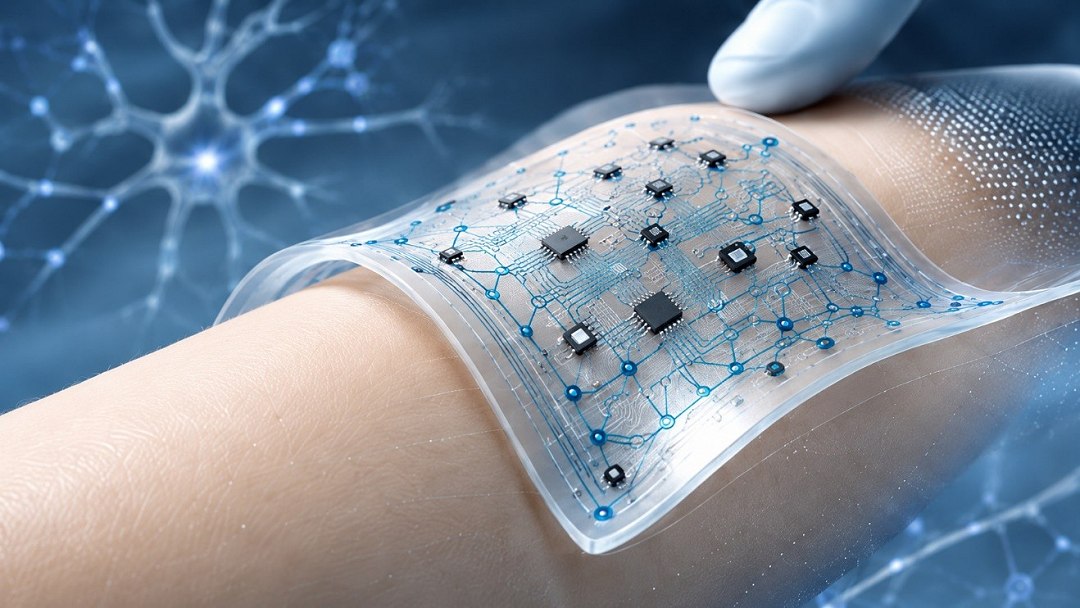
Soft technologies for healthcare
The goal of integrating sensors, computers, and other smart devices into the human body, whether for continuous health monitoring, controlling prosthetics, or in assistive technologies, has run into a fundamental physical conflict.
Processors capable of artificial intelligence are primarily limited by the inherent rigidity of silicon-based platforms. When coupled to the dynamic surface of a biological tissue, be it a flexing muscle or even a beating heart, these rigid chips cause physical trauma, separate from the tissue, and, well, don’t work.
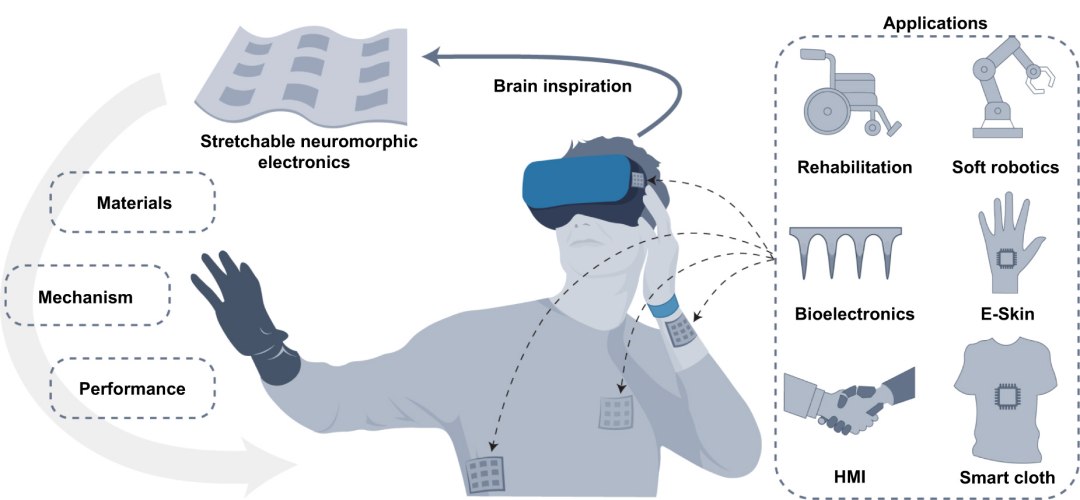
Therefore, purely rigid architectures are gradually giving way to flexible electronics (organic electronics) and brain-inspired (neuromorphic) electronics, which have already shown themselves capable of detecting, storing, and processing information, while mechanically adapting to biological tissues.
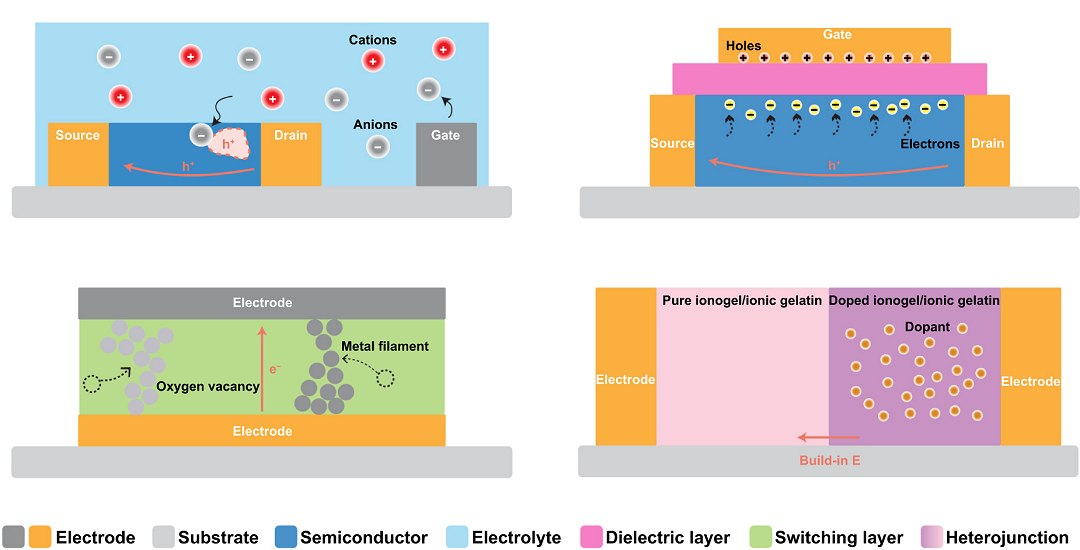
By transitioning to inherently flexible materials, such as malleable polymers and ionic gels, these systems maintain their computational functions even under direct physical stress. Instead of forcing electrons through rigid metallic tracks, these devices emulate the chemical processing of the human brain through a mechanism called ionic-electron conduction.
Electron soft materials
Operating similarly to a microscopic sponge, the active components of these new soft platforms absorb and release charges, whether electrons or ions, from their surrounding environment to continuously reconfigure their internal circuits.
This dual movement of ions and electrons allows a single flexible transistor to replicate biological synaptic plasticity, the same physical process that brain cells use to strengthen or weaken connections as they learn and forget.
Recent advances in materials are pushing these flexible components to operational limits unthinkable just a few years ago, allowing them to stretch up to 140% of their original length. This elasticity far surpasses the natural elasticity of human skin, ensuring that the devices remain intact even in highly mobile joints.
Because they rely on efficient biological chemistry, rather than “shocking” electrical currents, these devices perform complex tasks—such as classifying heart and respiratory rhythms—operating at ultra-low voltages, below half a volt. This energy requirement is a fraction of that supplied by a standard AA battery, ensuring that the electronic components remain thermally and electrically safe for continuous contact with organs and tissues.
This shift in the materials used is altering the manufacturing landscape of wearable technologies, moving from the complex assembly and adaptation of rigid sensors onto flexible bases to the printing of monolithic, flexible computing networks, in which sensing, memory, and processing are fused into a single elastomeric fabric.
This is what is enabling highly responsive electronic skin and flexible robotic limbs that interpret touch and movement locally, without needing to transmit data to an external computer.
Island-bridge architectures
Despite the commendable progress, significant engineering hurdles remain before these systems reach clinical application, primarily because flexible memory components degrade rapidly after a signal interruption, making them unsuitable for long-term data storage.
To overcome these challenges, researchers are focusing their attention on architectures known as bridge-islands. This design places permanent memory elements on rigid, microscopic islands, protected against deformation, and connects them with highly extensible coiled wires to maintain the flexibility of the device as a whole.
The combination of these structural layouts with chemically stable and non-toxic materials appears to provide a practical pathway for the transition of neuromorphic chips from the laboratory bench to durable and reliable integration into human tissues and organs. We’ll have to wait and see.
Source: www.inovacaotecnologica.com.br
Source link