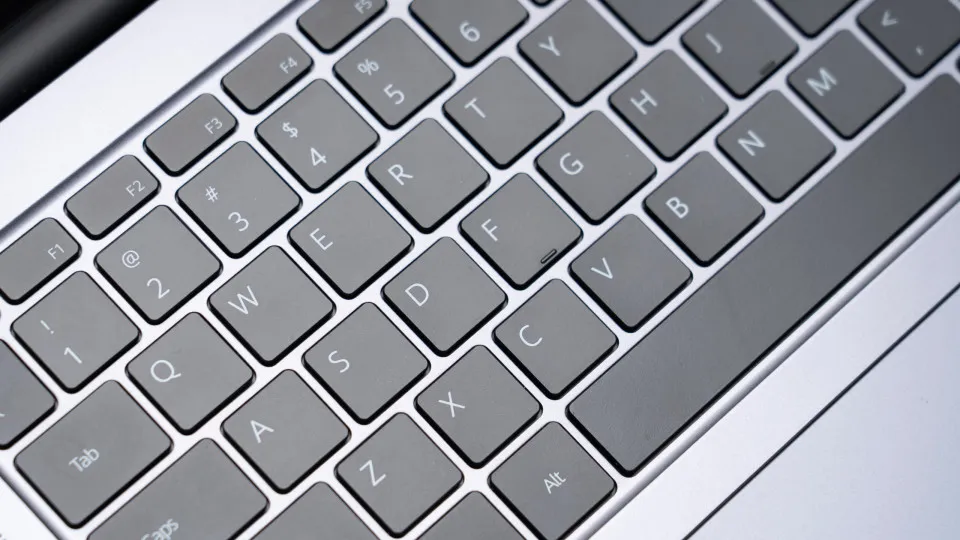
Meven with recent technological advances in computers and notebooks, some elements remain practically unchanged for the sake of functionality. A classic example is on the keyboard: the small protrusions on the “F” and “J” keys, present on most models.
These reliefs are part of a design pattern designed to facilitate typing without having to look at the keyboard. By positioning the fingers correctly, the user can identify, just by touch, where the hands are. This is essential for so-called “blind” typing, a technique that allows you to write with more speed and precision, while maintaining focus on the screen.
The “F” and “J” keys were chosen precisely because they occupy a central position on the main line of the keyboard, known as the “base line”. It is along this line that the index fingers should be supported while typing, serving as a reference to reach all the other keys intuitively.
The same principle applies to the numeric keypad, usually located on the right. The “5” key also has a small protrusion, allowing the user to quickly locate themselves and identify the position of the other numbers without having to look away.
This simple but efficient detail is part of a standard adopted globally since the first typewriters and continues to be maintained today by manufacturers, precisely because it improves ergonomics and productivity in daily use.
Source: www.noticiasaominuto.com.br
Source link