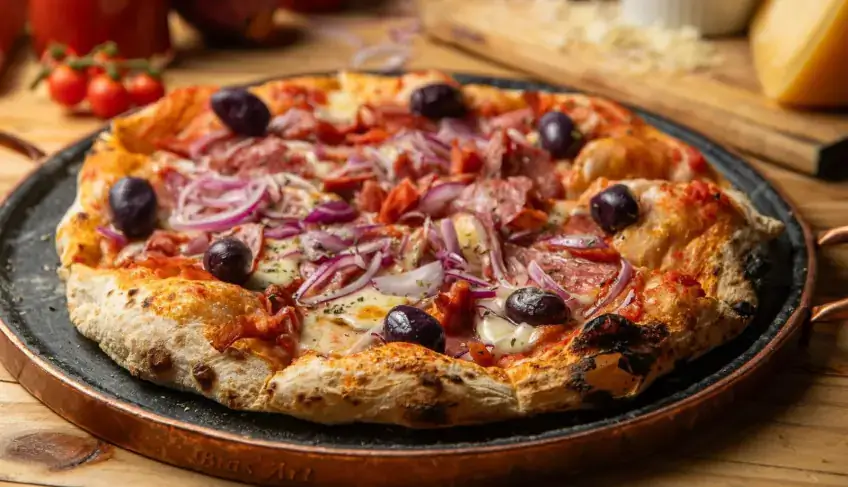
The quality of the dough, the well-prepared sauce and the fresh ingredients continue to be the main differentiators of a good pizza. The product won the hearts of Brazilians so much that a commemorative date was created: National Pizza Day, celebrated on July 10th. But, increasingly, technology has taken a leading role within pizzerias.
Artificial intelligence (AI) has been used to predict demand, reduce waste, speed up service, optimize deliveries and even guarantee product quality standards. This movement follows a broader trend in the food sector. According to a survey by Food Connection/Fispal Tecnologia, almost 30% of companies in the food and beverage industry already use artificial intelligence or robotics in their operations.
Although large chains have come out ahead, the popularization of AI has made the technology more accessible to small businesses as well. Today, Solutions available on the market allow you to automate day-to-day tasks, improve management and offer a more personalized experience to customers, without the need for large investments.
Among the most common applications of AI is demand forecasting. By analyzing sales history, consumer behavior, days of the week, weather and commemorative dates, the systems can estimate which flavors will be most in demand and at what times there will be the greatest movement.
“By predicting demand more accurately, entrepreneurs are able to buy better, produce more efficiently and reduce waste, which directly impacts operating costs”, explains Sebrae Solutions Manager, Eduardo Curado.
João Sesconetto applies AI to different parts of the business | Photo: Disclosure
The secret ingredient of innovation
Technology has also been transforming relationships with customers. AI tools integrated into WhatsApp and other digital channels can answer questions, take orders, suggest flavors according to the customer’s consumption profile and even recommend complements, such as drinks and desserts. As a result, service becomes more agile and the team can direct its efforts to other strategic activities.
Another benefit is in managing deliveries. Intelligent systems analyze information in real time to better organize delivery drivers’ routes, reducing delivery time and increasing operation efficiency. AI has also gained space in marketing strategies. Based on purchase history, platforms can segment customers and create more assertive campaigns, offering personalized promotions and strengthening relationships with consumers.
In practice, AI is already part of the routine at Sesconetto’s, a pizzeria with three units in Brasília, which bears the surname of the founding family. For the partner, João Sesconetto, technology is no longer just a tool for creating texts and has started to support different areas of the business. Today, the company uses artificial intelligence resources to develop marketing campaigns, structure projects, produce content aligned with the brand’s identity and, more recently, develop systems aimed at managing operations.
“Artificial intelligence already knows a lot about Sesconetto’s”, says the businessman. According to him, the tools were fed with information about the history of the pizzeria, whose purpose is to offer a welcoming experience, based on the concept of “family serving friends”. The AI was also trained with characteristics that are part of the brand’s identity, such as artisanal production, slow fermentation of the dough, the use of Italian flour and concern for the quality of the ingredients.
This allows it to generate texts and suggestions that reflect the essence of the company, making our communication faster and assertive.
João Sesconetto, entrepreneur
The use of technology also advances to strategic areas of management. According to Sesconetto, the pizzeria is developing AI-based solutions to assist with inventory control and financial monitoring, expanding the use of the tool beyond marketing. For him, innovation does not replace care in preparing pizzas or close customer service. “Technology helps us gain efficiency. In addition to allowing the team to dedicate even more time to what really makes a difference, which is providing a good experience for those who enter our home”, he concludes.

AI in practice
Sebrae offers entrepreneurs the course “AI in practice for small businesses”. With it, small business owners can discover how artificial intelligence can contribute to the day-to-day operation of companies in a practical and safe way.
Participants can learn about the basic concepts of generative AI, tips for creating efficient prompts to solve business challenges and essential notions of ethics and safety when using technology.
The course also presents ways to use AI tools to optimize marketing and customer service, creating projects that boost sales and productivity.
Business in day
To help entrepreneurs transform technology into real gains for their business, Google, Sebrae, Itaú Unibanco and Tera launched Negócio em dIA, a free national AI training program aimed at small and medium-sized entrepreneurs in Brazil.
Google provides content for digital presence, marketing and use of tools such as Gemini and Company Profile on Google. Sebrae contributes with the content of the management and leadership course combined with its national reach, experience in supporting micro and small businesses and the diagnoses that support the initiative. Itaú Unibanco participates in the finance front, and Tera leads the educational design and operation of the journey.
Source: www.agenciasebrae.com.br