
What if the future of artificial intelligence isn’t a single powerful model, but an ecosystem of intelligent agents working together to solve problems, accelerate innovation and help people focus on what matters most? For Mustafa Cetin, that future is already taking shape.
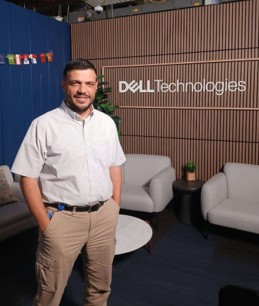
As a PhD Data Scientist and Data Science Consultant within Dell Technologies’ Service AI group, Mustafa works at the intersection of applied AI research and scalable engineering. His mission is to transform advanced AI concepts into practical solutions that help teams work more efficiently and solve complex challenges faster.
What excites him most is seeing the frameworks he develops enable innovation in ways he never originally imagined. By creating reusable AI foundations, he helps teams collaborate more effectively, accelerate development and deliver AI-powered solutions with greater consistency.
His expertise centers on building domain-agnostic multi-agent system frameworks, including Memory Agents, Conversation Agents and Orchestrators. These modular AI building blocks are designed to work across different projects, allowing teams to leverage the latest advances in multi-agent collaboration without starting from scratch each time.
From Developer to AI Orchestrator
Throughout his career, Mustafa has witnessed AI transform not only technology, but also the role of the data scientist.
Earlier in his career, much of his time was spent writing code and manually building solutions. Today, AI allows him to focus more on system design, architecture decisions and strategic problem-solving.
Across the data science and machine learning lifecycle, AI supports activities ranging from discovery and research to experimentation and implementation. Automated search capabilities help uncover relevant information before development begins, while AI-assisted profiling, data quality checks and code generation accelerate tasks that previously required significant manual effort.
The result is a meaningful shift: less time spent on repetitive execution and more time dedicated to high-value decisions where human judgment, context and accountability remain essential.
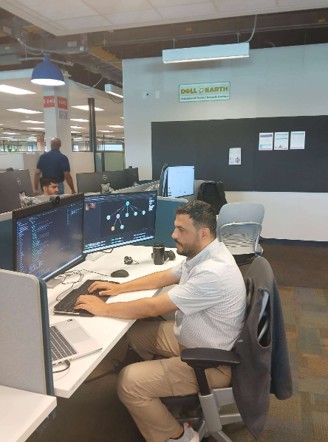
Solving one problem for many teams
One of Mustafa’s most impactful contributions started with a simple observation.
Across Service AI, multiple teams were often tackling similar challenges independently. New projects frequently required custom memory management, conversation handling and orchestration capabilities, leading to duplicated effort and inconsistent approaches.
Recognizing an opportunity, Mustafa designed reusable, plug-and-play agent components inspired by advances in multi-agent collaboration, particularly the Chain-of-Agents paradigm.
Instead of rebuilding foundational capabilities for every project, teams could now assemble solutions using shared AI building blocks.
The impact was significant. Projects that once required weeks to establish custom infrastructure could build functional multi-agent solutions in days, allowing teams to focus more energy on solving customer challenges rather than recreating the same technical foundations.
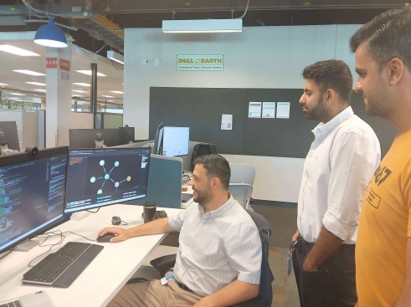
Turning innovation into action
When identifying opportunities for innovation, Mustafa focuses on more than technology alone.
His approach begins by looking for friction points — repetitive work, inefficient processes and recurring challenges that appear across projects. By understanding where teams spend the most time and effort, he can identify meaningful opportunities for AI to create value.
Working across multiple initiatives also provides visibility into recurring patterns. When similar needs emerge repeatedly, they often signal an opportunity to build reusable solutions that can benefit a broader audience.
Continuous learning remains a fundamental part of this process. Mustafa regularly explores emerging research in areas such as multi-agent systems, agentic architectures and reinforcement learning, while also experimenting with new approaches through rapid prototyping and validation.
For him, successful innovation happens when research, experimentation and practical business needs come together.
A future powered by humans and AI
Looking ahead, Mustafa believes the future of data science will be shaped by the continued growth of multi-agent systems, advances in Agentic Reinforcement Learning and increasingly AI-native development lifecycles.
Yet despite these technological advances, he believes some responsibilities should always remain human-owned.
Understanding stakeholder intent. Exercising ethical judgment. Providing accountability. Navigating ambiguity.
Rather than replacing data scientists, Mustafa sees AI enabling them to operate at a higher level — focusing on strategy, decision-making and problem-solving while intelligent systems handle more of the execution.
That vision is what excites him most about the future of AI: not replacing human potential, but amplifying it.
Advice for the next generation
For students and early-career professionals interested in data science and AI, Mustafa offers a simple message: focus on becoming a problem solver.
Technologies, frameworks and tools will continue to evolve, but strong foundations in mathematics, statistics, programming and critical thinking will always remain valuable.
He also encourages aspiring professionals to think beyond individual models and understand the complete lifecycle of a solution — from problem definition and development to deployment and long-term maintenance.
Most importantly, he believes future success will come from learning how to collaborate with AI — not simply build it.
Because while technology will continue to change, the ability to solve meaningful problems — and turn ideas into impact — will never go out of style.
Dell reported this
Source: www.dell.com
Source link