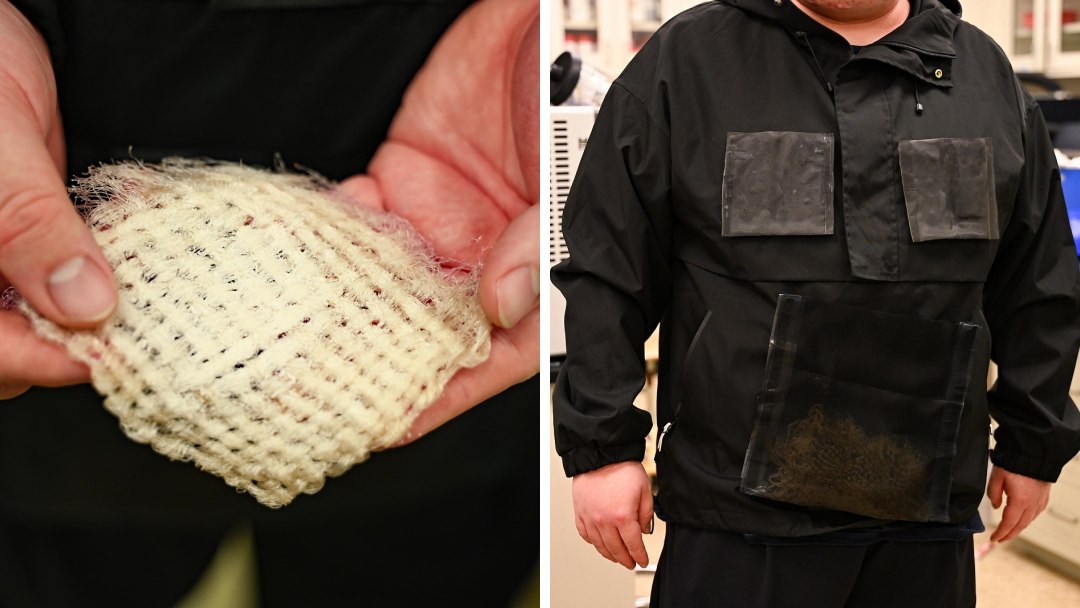
Clothing that collects water from the air.
Bottled water may soon give way to more flexible and comfortable devices, with an unbeatable advantage: These new devices will refill themselves, drawing water from the ambient air.
The idea is that anyone who spends a lot of time being physically active, from amateur hikers, campers, and runners to agricultural workers and first responders, can rely on their own autonomous water source incorporated into their clothing.
What is making this possible is a textile fiber capable of collecting moisture from the air and directing it to removable collection units. These units are placed in a foldable collection piece and heated to produce water.
Used to make jacket pockets, the fabric produced between 400 and 900 milliliters of potable water per day, depending on ambient humidity levels – that’s no less than 10 times better than similar technologies demonstrated previously.
“The big breakthrough here is that the team didn’t simply create another water-absorbing material,” said Professor Keith Johnston of the University of Texas at Austin. “They designed a pathway for water to move rapidly, from vapor in the air to liquid on the fiber’s surface and then into the fabric. This transport system is what allows the material to work not just in a small lab test, but also in a wearable system.”
Fiber architecture
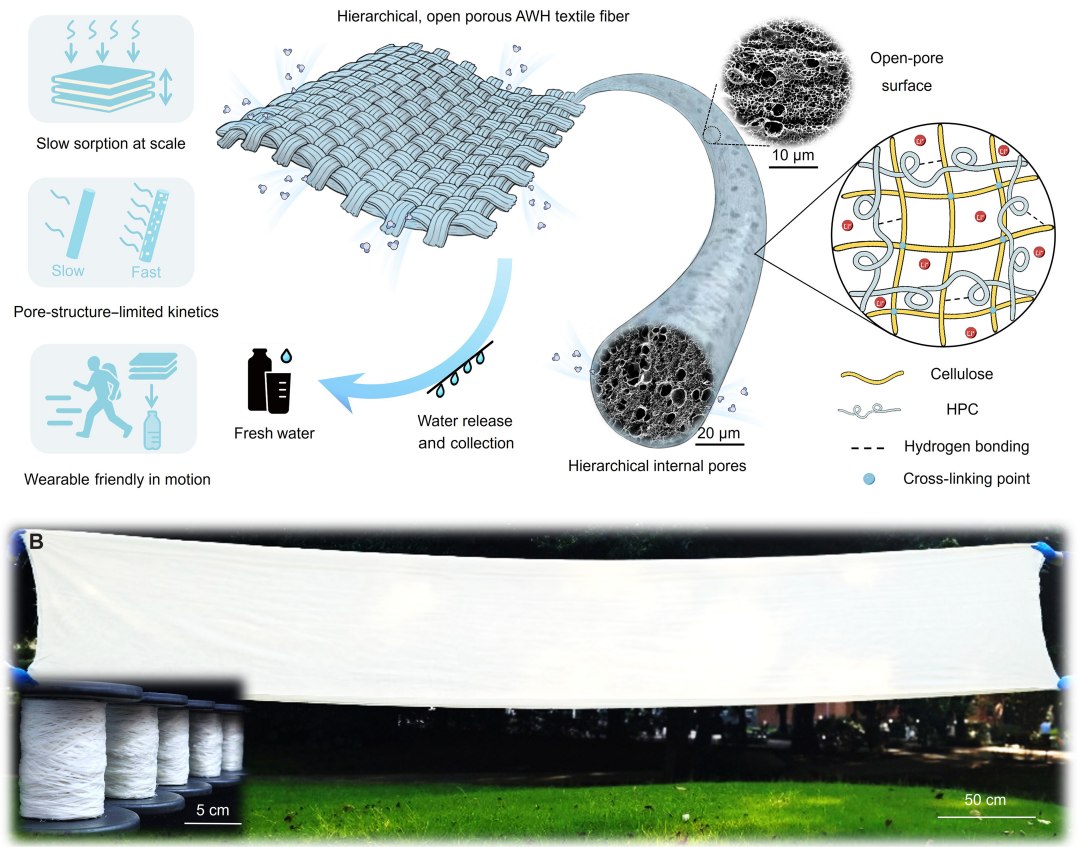
What distinguishes these new water-harvesting fibers is not exactly their composition (their base is cellulose), but their internal structure: They present a surface topology, with open pores, and an internal topology, with hierarchical pores. This structure accelerates the liquefaction of vapor on the surface and the subsequent transport of water.
When woven, the fibers maintain efficient vapor diffusion through their macroporous and breathable architecture, exhibiting exceptional water absorption capacity even under varying levels of relative humidity.
Researchers are looking at applications that go beyond clothing, including backpacks, tents, emergency shelters, and other outdoor equipment, allowing items people carry daily to help collect water from the air. Soon, they will study the application of the technology in outdoor activities, remote field operations, disaster response, and water access in arid regions or those with limited infrastructure.
Source: www.inovacaotecnologica.com.br
Source link