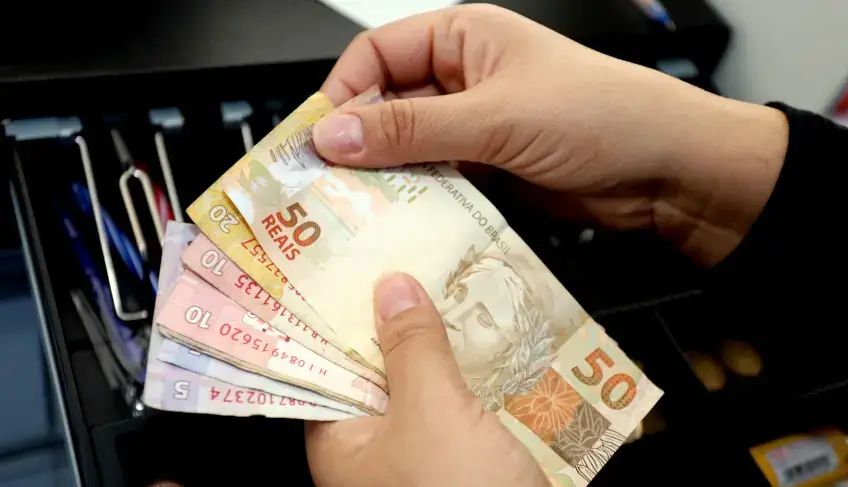
President Luiz Inácio Lula da Silva presented, in a speech on Thursday night (30), the general lines of the new phase of the Desenrola Brasil program. The federal government’s package of measures provides instruments to address the high level of indebtedness of Brazilians. Currently, 80.4% of families are in this situation, according to a survey by the National Confederation of Commerce in Goods, Services and Tourism (CNC).
According to the president, the program will allow indebted Brazilians to renegotiate their credit card, special check, revolving, personal credit and Fies debts. These negotiations will allow for lower interest rates (maximum 1.99%) and discounts of 30% to 90% of the value, providing smaller installments and more time to resolve debts.
Also according to Lula, each person who joins the program will be able to withdraw up to 20% of the Guarantee Fund balance to pay off their debts. The president added, however, that the government will adopt means to block, for a year, the access of those registered with Novo Desenrola Brasil to all online betting platforms, to prevent these people from contracting new debts from gambling.
Program Details
According to preliminary and not yet confirmed information, the program should be detailed next Monday (4), in Brasília. The expectation is that it will cover Brazilian debtors with an income of up to five minimum wages (R$8,105.00).
As already anticipated by President Lula, the main mechanism of the new program will be the use of resources from the Severance Indemnity Fund (FGTS) to pay debts.
The Minister of Labor and Employment, Luiz Marinho, stated that this new phase of Desenrola should consume approximately R$4.5 billion from the FGTS (Service Time Guarantee Fund), with a ceiling of R$8 billion. Currently, the Fund’s balance is R$705 billion. He added that the fund’s resources will be transferred by Caixa Econômica Federal after negotiation between the debtor and the creditor financial institution.
The use of revolving card credit alone — the most expensive modality in the financial market — rose by almost 10% in the first quarter of 2026. This type of credit is identified as one of the main factors behind the high level of indebtedness of the Brazilian population.
Dario Durigan, Minister of Finance, said that the department met with the presidents of the country’s main banks, including Banco do Brasil and Caixa Econômica Federal, to discuss the measure. According to the minister, the government will invest in “good practices, both in the offer of future credit and from the point of view of financial education.”
The government is also working to include individual microentrepreneurs (MEI), microenterprises (ME) and small businesses (EPP) in the program. Facilitating access to capital, but with guidance and planning, is the core of Sebrae’s work in this area. Since 2024, the institution has facilitated, through the Micro and Small Business Guarantee Fund (Fampe), more than 133 thousand credit operations totaling R$11 billion in loans. In addition, more than 1 million assistance services were provided with assisted credit, covering 721 thousand small businesses.
Planned measures
- Release of the use of FGTS to pay debts. The government has already announced that there will be limits on the use of the fund, linking the withdrawal to the payment of debts. It is not yet known how the government will do this, whether through a Provisional Measure or another instrument.
- Discount of up to 90% on debts, which will be refinanced into a new loan with interest of up to 1.99% per month.
- Main target debts of the package: credit card, direct consumer credit (CDC) and special check.
- The federal government estimates that between R$20 billion and R$30 billion in debts will be renegotiated
- Restriction on bets. Without elaborating yet, the government mentions that it intends to create obstacles to the use of online betting, to avoid new cycles of debt.
- In addition to individuals, the government intends to include MEIs (individual microentrepreneurs), micro and small companies, student loan debtors, truck drivers, app drivers and taxi drivers in Novo Desenrola Brasil.
Source: www.agenciasebrae.com.br
Source link