The technology targets the new generation of cell phones, in addition to wearables and XR devices, which increasingly rely on AI processing directly on the device.
More speed to handle local AI
According to the company, the focus of UFS 5.0 is to monitor the growth of data generated by artificial intelligence systems running on the device itself, without depending on the cloud. This helps reduce delays and improves response on heavier tasks.
The performance leap is big: up to 10.8 GB/s of sequential reading, more than double the previous generation, UFS 4.1.
The impact appears on several fronts:
- faster file transfers in everyday use
- reduced delay in tasks with AI
- running language models directly on the device
- better performance with multiple applications open
- more stable local processing
Lower consumption and more efficient battery
One of the most relevant points of the new standard is energy consumption. According to Samsung, UFS 5.0 reduces energy consumption by more than 40% compared to the previous generation.
This gain comes from internal adjustments to the chip’s functioning, such as power control techniques and the use of different voltage levels during operation.
In practice, this means devices that can maintain performance for longer without draining the battery with the same intensity.
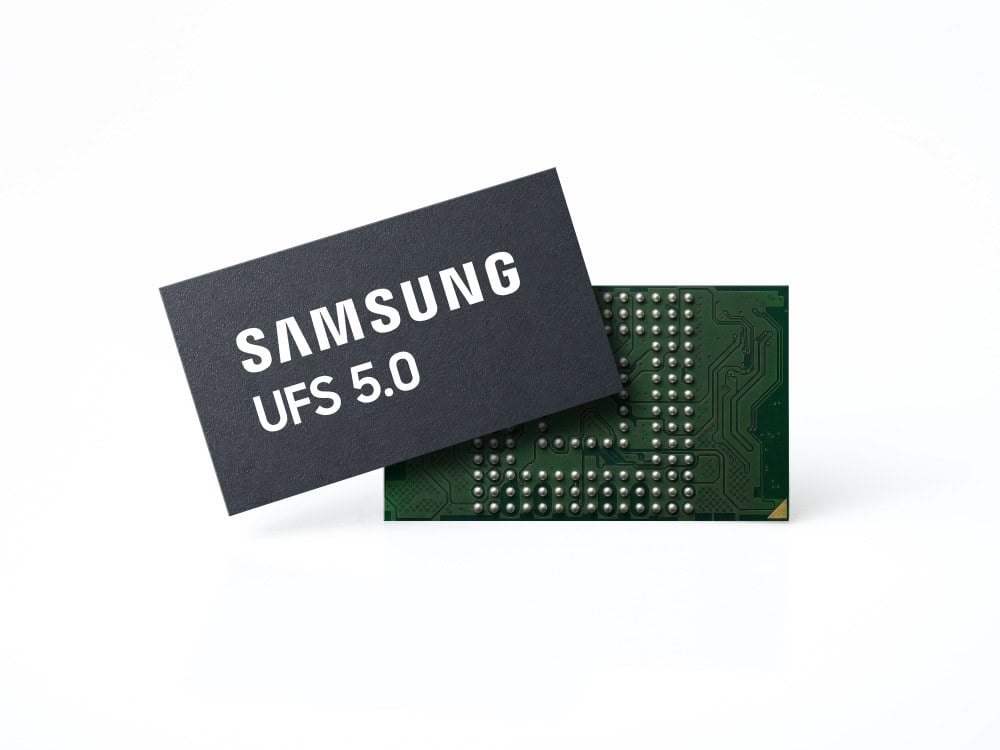
A smaller component that changes the design of the devices
In addition to performance, the size also draws attention. The module measures 7.5mm x 13mm x 0.9mm, about 16.7% smaller than the previous version.
It may seem like a technical detail, but this directly influences the design of the devices. With less space occupied, manufacturers can better reorganize internal components.
This opens up space for applications in:
- high performance smartphones
- wearable devices
- extended reality (XR) headsets and glasses
- systems with embedded artificial intelligence
When new Samsung technology hits the market
Samsung reported that mass production of UFS 5.0 will begin in the fourth quarter of this year, with versions that can reach up to 1 TB of capacity.
The expectation is that the technology will first appear on premium devices, especially those focused on embedded artificial intelligence features.
Continues after advertising
In the era of embedded AI, storage devices are evolving to become a key factor in shaping artificial intelligence experiences.
Jangseok Choi, head of memory product planning at Samsung Electronics, said in a statement.
As a result, storage is no longer just internal space and starts to have a direct impact on the overall performance of devices, especially in AI functions that depend on immediate response.
Source: www.bing.com
Source link