Solid-gas battery
While full-fledged solid-state batteries are not yet available, a liquid-solid hybrid prototype is attracting attention because it has another unbeatable advantage: It uses hydrogen.
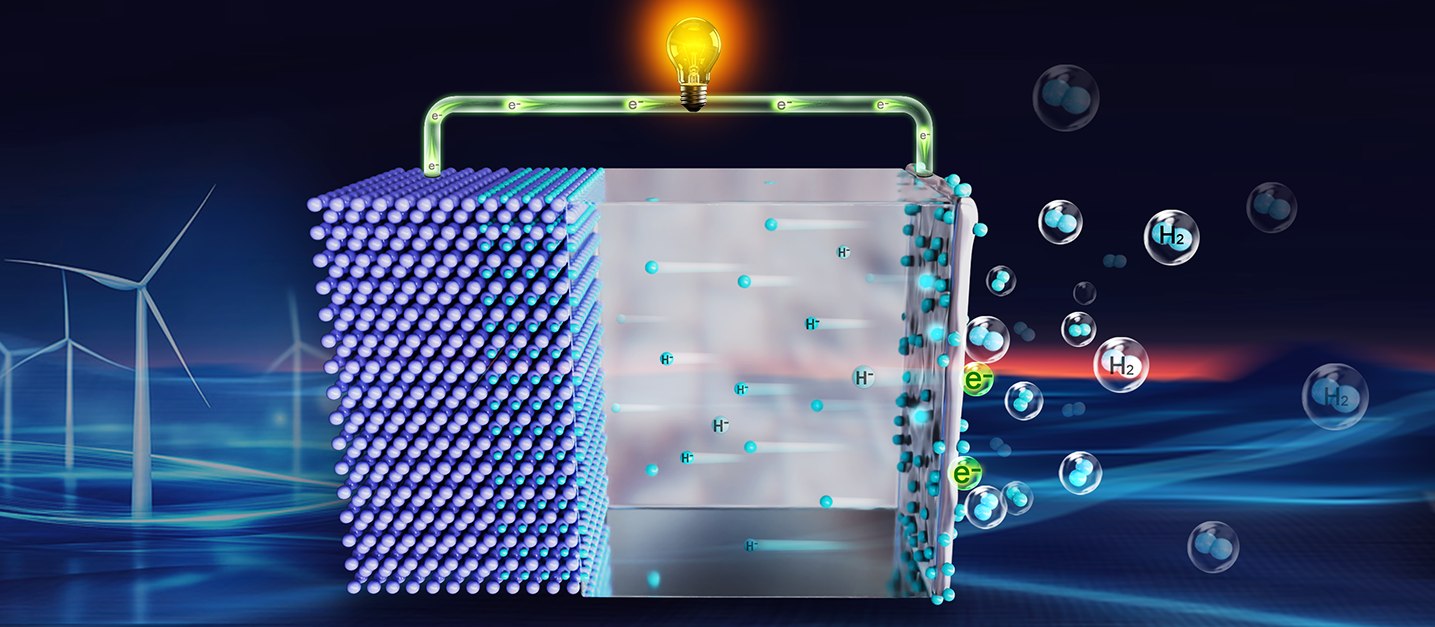
It is the world’s first gas-solid type battery based on hydrogen ions: It uses hydrogen gas and a metal as electrodes.
This means that this battery can not only power electrical equipment, like a conventional battery, but also allows for highly efficient hydrogen storage at ambient temperature and pressure, through an innovative mechanism of hydrogen and electricity co-storage.
Hydrogen storage remains one of the biggest challenges to the large-scale adoption of clean technologies based on the gas, whose only byproduct is pure water. Conventional approaches rely on extreme conditions, including compression to up to 700 atmospheres or cryogenic liquefaction near absolute zero, resulting in high energy consumption, safety risks, and greater technical complexity.
Therefore, the development of a safe, efficient, and practical hydrogen storage technology capable of operating in environmental conditions is essential for the future of the hydrogen economy .
Hydrogen-ion battery
Hydrogen ions (H + ), the electron-rich form of hydrogen, possess high reactivity and high energy density, making them promising charge carriers for solid-state batteries. However, their inherent instability under ambient conditions has hindered their practical application in electrochemical energy storage.
Shangshang Wang and colleagues at the Dalian Institute of Physical Chemistry in China have come a long way in beginning to overcome these obstacles. First, they developed a series of novel electrolytic materials for hydride ions, which allow for the stable transport of these ions. Next, the team developed the first ultrafast, low-temperature hydride ion conductor, which enabled them to build the first prototype of a fully solid-state hydrogen-ion battery .
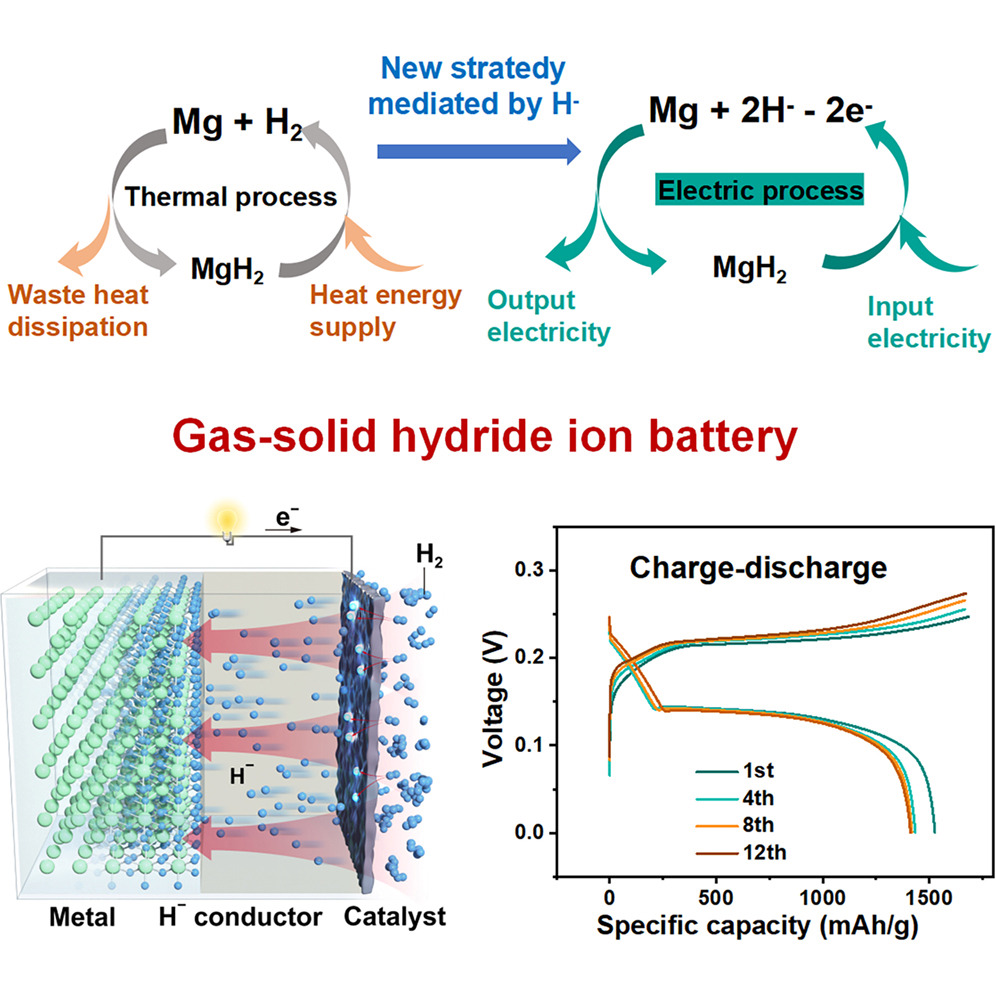
Now, they are proposing a new concept: A gas-solid hydride-ion battery, which uses hydrogen gas as the positive electrode and metallic magnesium as the negative electrode. During discharge, the hydrogen in the positive electrode is reduced to hydride ions, while the magnesium in the negative electrode is oxidized and converted to magnesium hydride. The reverse process occurs during charging, allowing for the simultaneous storage of hydrogen and electricity.
Electricity or hydrogen
The prototype solid-gas battery has a theoretical capacity superior to that of most known battery systems, in addition to its hydrogen storage functionality.
Experimental results showed that, during hydrogen charging, the battery provides an initial discharge capacity of up to 1,526 mAh g⁻¹ . When a voltage of 0.3 V was applied, approximately 6.0% by weight of hydrogen was released at room temperature. After 60 cycles, capacity retention remained above 70%, and the battery operated stably over a wide temperature range, from -20 °C to 90 °C.
Furthermore, a series stack, composed of ten individual cells, generated an output voltage greater than 2.4 V and powered an LED, marking the birth of the prototype gas-solid ion battery.
It is still only a small, laboratory-scale prototype, but it also demonstrates a new route to overcome one of the biggest obstacles to hydrogen adoption, eliminating the need for extreme pressure or cryogenic conditions.
Source: www.inovacaotecnologica.com.br
Source link