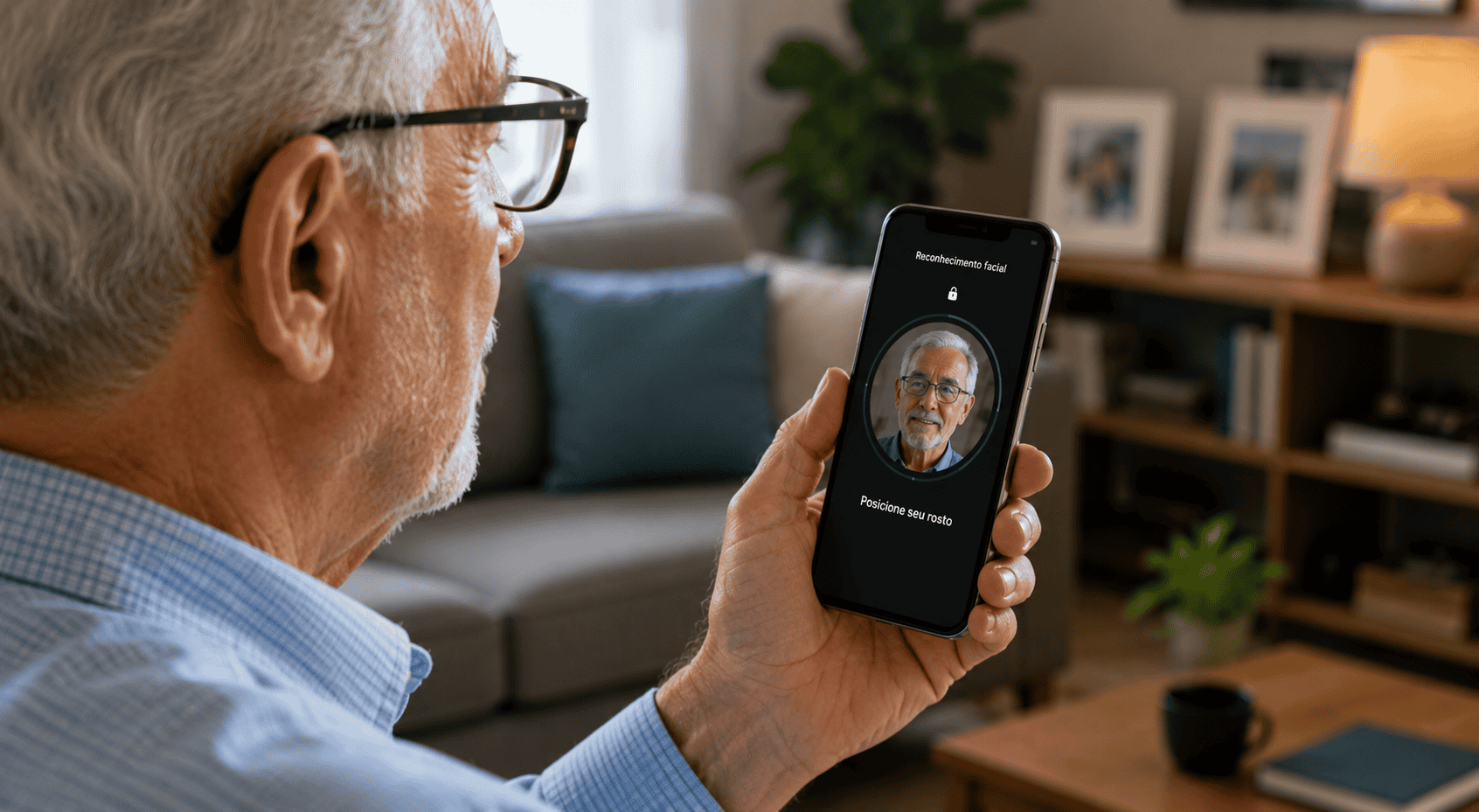
How important is accessibility when we talk about technology? For me, there is no advancement without inclusion.
Recent data presented by the United States National Institute of Standards and Technology (NIST) shows that the error rate of a facial recognition system can be 1% among people in their 20s and reach 5% among those aged 70 and over.
Based on the last Census, in 2022 Brazil had 30,936,186 people between 20 and 29 years old and 14,292,869 people aged 70 and over. In a hypothetical scenario in which each person was subjected to facial recognition once, we understand that 1% error among Brazilians aged 20 to 29 represents approximately 309 thousand failures, while 5% among people aged 70 or over would represent approximately 715 thousand failures.
Compulsory technology for granting, maintaining and renewing federal social security benefits, as well as for unlocking the INSS benefit for taking out a payroll loan, the use of facial recognition can be an accessibility barrier for older people.
When we consider the digital literacy barriers faced by part of the elderly population, we realize that the use of facial recognition goes beyond the simple gesture of “looking at the screen”. The procedure requires following commands such as finding an environment with a smooth background, correctly positioning the front camera in front of the face, moving the device closer or further away and carrying out different confirmations until the image is sent. These are tiring and unintuitive steps, frequently questioned even by younger people accustomed to the daily use of technology.
The problem is not new. Discussions about algorithmic racism have already demonstrated how unrepresentative training bases can compromise the performance of these technologies for certain groups. The issue reappears when we observe the low presence of aged faces in these databases, which can reduce the systems’ accuracy. Similar difficulties affect black, indigenous and trans people even more clearly, according to the Brazilian Institute for Consumer Protection.
For accessibility to exist, technology companies and organizations that hire these solutions need to invest in modernizing the systems, but also in the experience of those who use them. This includes offering more didactic guidance, clear instructions and a truly intuitive step-by-step guide, allowing people with less digital familiarity to complete the procedure without depending on the help of third parties.
In a country marked by racial, ethnic, generational and gender diversity, thinking about access to technology requires considering the different faces that make up the Brazilian population. Technological advancement can only be called advancement when it includes color, race, ethnicity, gender and age. From what we still observe in practice, we are far from that.
Source: www.bing.com
Source link