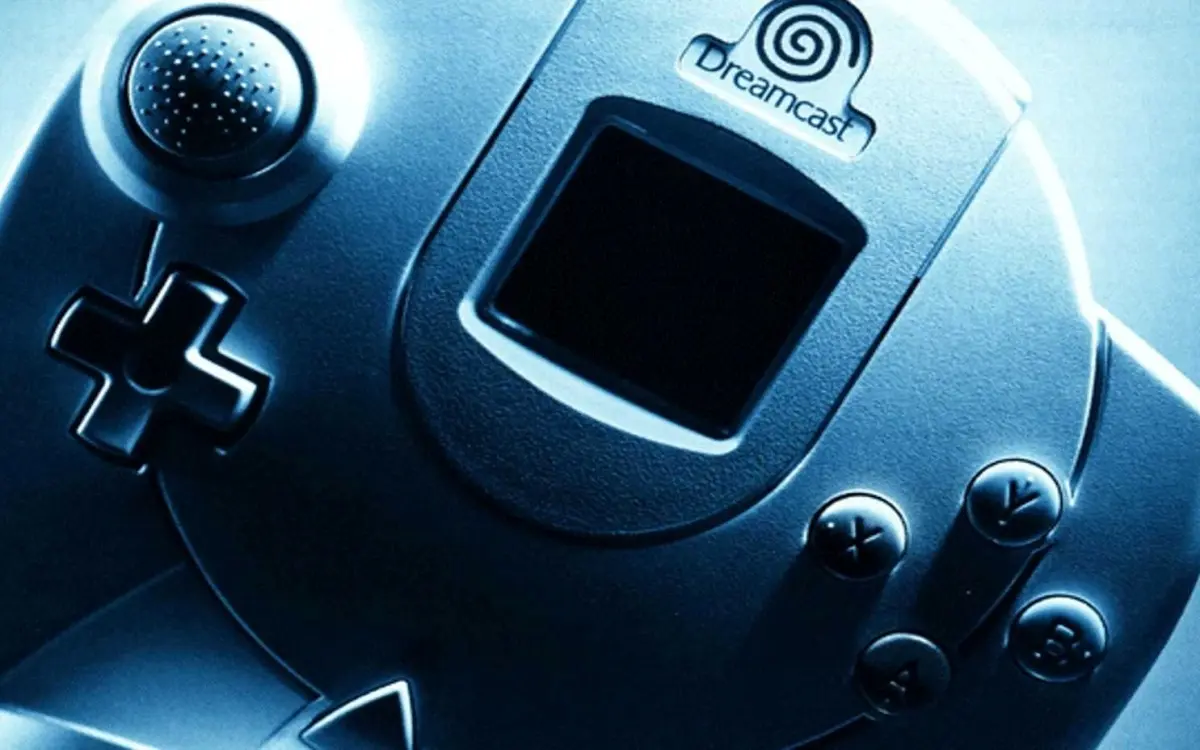
Twenty-five years after Sega ended production of the device, new Dreamcast games continue to appear. The most recent case is a survival horror with fixed cameras built to run on the original hardware, without emulation.
The console came out in Japan in November 1998 and reached the rest of the world a year later. Sega discontinued it in March 2001, twelve months after the Japanese debut of the PlayStation 2, and abandoned the console market altogether. It was only two and a half years of commercial life.
The official library stopped there. The unofficial one, no.
White Creek wants to explore the machine’s limits
The project is signed by Story Bird Studios, with publication by PixelHeart and JoshProd, two well-known houses on the physical release circuit for old consoles. The French studio had already delivered Finding Teddy to the Dreamcast, in addition to works such as Ganryu 2, Guns of Mercy and Golden Force on modern platforms.
The protagonist is Alicia Morelli, a freelance exorcist who investigates a small town gripped by outbreaks of inexplicable violence. The arsenal combines psychic powers, firearms and a cell phone, and each encounter with a possessed person imposes a choice between execution or saving the soul.
The studio makes a point of marking the difference between retro aesthetics and native development. The official communication rejects the “Dreamcast-inspired” game label and states that the title was designed for the machine from day one, with visual ambition comparable to that of the NAOMI arcade board.
“Every camera angle is a narrative choice. Every shadow, an intention,” wrote Story Bird in the project description, when explaining why the fixed cameras of the classic genre were retained rather than replaced with free camera control.
Why the console became homebrew land
Survival comes from technical decisions that Sega made in 1998 and that have aged in a peculiar way.
| Feature | Practical effect decades later |
|---|---|
| First console with factory built-in modem | World leaderboard and online multiplayer as early as 1999, basis for community servers today |
| GD-ROM format bypassed early | The device boots from a common CD, without any physical modifications |
| Critical functions not tied to Sega’s network | The manufacturer never had a way to turn off the devices remotely |
| Processing power for 3D with multiplayer | Supports ambitious projects, not just 2D demos |
This combination created a rare window… The device has enough connectivity to handle modern downloads and uploads, but not enough to depend on an infrastructure that the manufacturer can close by decree.
Some of the titles that defined the original catalog remain as references for those who develop today:
| Game | Year of release on console |
|---|---|
| Sonic Adventure | 1998 (Japan) |
| SoulCalibur | 1999 |
| ChuChu Rocket! | 1999 |
| Shenmue | 1999 |
| Resident Evil Code: Veronica | 2000 |
| Jet Set Radio | 2000 |
| Space Channel 5 | 1999 |
| Phantasy Star Online | 2000 |
The campaign has not yet opened
The project’s crowdfunding page on Kickstarter remains marked as pre-launch. There is no amount raised, target announced or deadline defined so far.
What exists today is an interest capture page, where supporters register to receive notice when the campaign actually starts. PixelHeart reported that details of the collector’s edition and schedule will be revealed at this stage.
The game has an open page on Steam and development is also confirmed for PS5, PS4, Xbox, Switch and Switch 2. The PC version comes out in parallel, but the Dreamcast remains the target platform for the design.
Who supports this survival?
The structure around the console is more organized than it seems. Dreamcast Live maintains active servers for a considerable list of titles with original online mode, allowing games in 2026 using the modem of the time or network adapters.
Specialized publications such as The Dreamcast Junkyard track releases and maintain surveys of the complete commercial library. The dedicated subreddit remains busy, and dozens of independent teams, hobbyists, and solo developers are working on ports, remakes, and emulation tools.
The pattern that emerges from these homegrown games is simple: When a platform offers a stable base, downloads, online play, and accessible development tools, the community builds on it for decades, long after the manufacturer is gone.
Also read:
- LEGO and SEGA announce Mega Drive console in buildable version with 479 pieces
- SEGA Universe wants to revive the company’s old franchises beyond games
- Hideki Sato, engineer responsible for Mega Drive, Saturn and Dreamcast, dies
While Sony closes stores, PixelHeart bets on cash
The contrast with the present is the publisher’s commercial argument. Sony confirmed the closure of PlayStation 3 and PS Vita digital stores and announced that it will deactivate its disc pressing factories by January 2028, closing those platforms to any new content.
PixelHeart responded to this movement by promising that White Creek will come out in a real physical box, with the argument that collectors should own the games, not just access them. It’s a positioning decision as much as a product decision.
The closest modern parallel to what the Dreamcast became is the Playdate, Panic’s portable launched in 2022 with open development tools. The device already has more than 1,600 titles hosted on itch.io, the result of the same principle that has sustained the Sega console scene for two and a half decades.
Sources): Engadget, Kickstarter and The Dreamcast Junkyard

SEGA reinforces commitment to reviving classic franchises.
Source: www.adrenaline.com.br
Source link