When you’re responsible for keeping the lights on, “good enough” infrastructure doesn’t stay good enough for long.
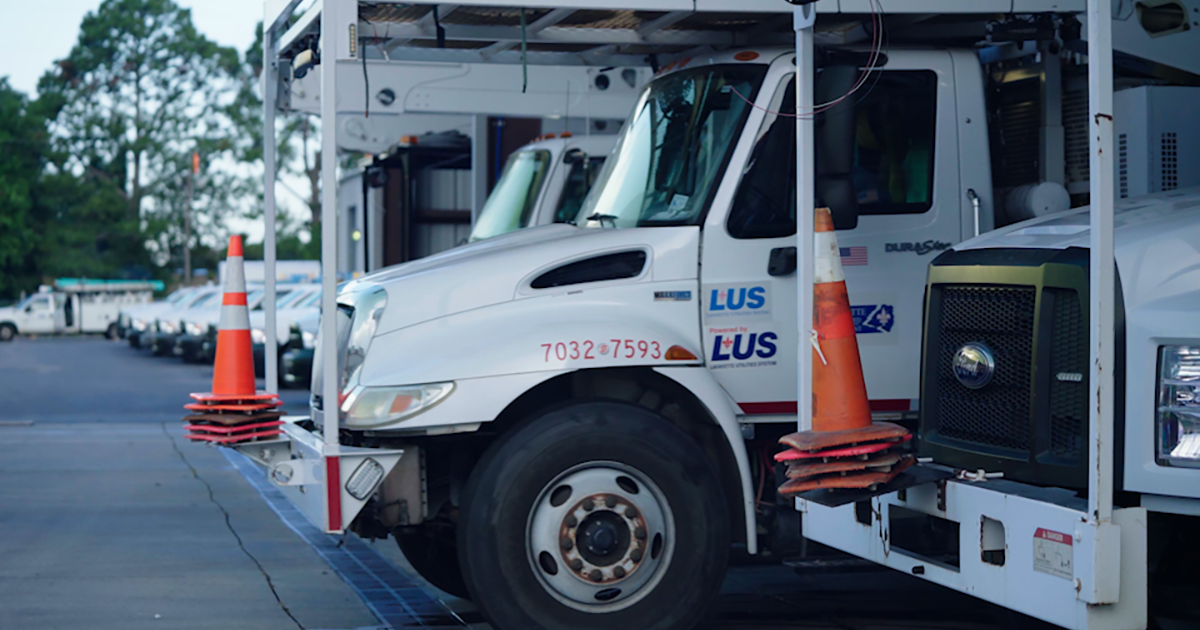
For Lafayette Utilities System (LUS) in Louisiana, that responsibility comes with a twist. LUS is a citizen-owned public utility, providing electric, water and wastewater services to around 245,000 people in Lafayette Parish.
The residents who depend on those services are also the owners the organization answers to. That means every infrastructure decision gets evaluated not just on technical merit, but on long-term value to the community. When LUS invests in new technology, they’re spending taxpayer dollars – and residents expect those investments to deliver reliable service today while positioning the utility to handle whatever the next decade brings.
That mindset guided a recent, deliberate shift in how LUS approaches storage.
Looking ahead, not just keeping up
LUS has relied on Dell Technologies infrastructure for nearly a decade. Dell PowerEdge servers and Dell data protection solutions helped them operate through hurricanes and severe Gulf Coast weather.
But as the city of Lafayette continued to grow and more services moved onto virtualized platforms, the IT team could see where the pressure might build next:
- More mission-critical workloads competing for performance
- Tighter expectations around recovery time and data integrity
- Efficiency goals that put real scrutiny on power consumption
- An operations team that needed simpler, more unified administration
They didn’t wait for infrastructure problems to force their hand. They made a decision to standardize on Dell PowerStore as a unified platform for block and file workloads, creating one modern, resilient foundation that could grow with Lafayette and protect essential services no matter what comes next.
How PowerStore supports public utility resilience
LUS wanted a platform that fit the way their teams already operated.
Resilience built into the design
PowerStore gives LUS capabilities like Metro LUNs, synchronous replication and file-level snapshots, so the storage layer actively supports continuity strategies.
These features help the LUS team mirror data between sites in real time and fail over in seconds if one location goes down. In a region where severe weather knocking out power isn’t a question of if but when, turning the lights back on more quickly means a faster road to recovery.
Operational clarity when it matters most
The platform integrates with Active Directory and supports unified management, which simplifies everyday administration.
During a storm or an unplanned event, that simplicity translates into fewer steps, fewer chances for error and faster action.
A migration plan aligned with their mission
Working with Dell Services and a dedicated resident engineer, LUS migrated 93TB of block data and 44TB of file data (137TB total) three times faster than previous efforts – without downtime or disruption for residents.
According to Matthew Suire, network engineering and operations supervisor at LUS, “Dell engineers plugged it in, configured it and we were ready to go. The migration was so smooth, our users didn’t even notice it was happening.”
The impact inside the utility
Once PowerStore was in place, LUS quickly saw the impact across operations – and in their ability to better serve residents.
- Around 50% better virtual system performance, giving critical applications the headroom they needed during high-demand periods.
- Service deployment sped up by about 30%, allowing IT to say “yes” to new projects and changes with less hesitation about the underlying infrastructure.
- Backup windows dropped by up to 75% for key workloads, reducing scheduling conflicts and freed up staff who previously had to monitor long-running jobs.
- With PowerStore’s Metro LUNs, synchronous replication and unified architecture, LUS reached near-zero RPOs and seamless failover between sites— a critical capability in a region where weather is a constant variable.
- The new environment uses roughly 25% less power, helping LUS stay aligned with sustainability targets while keeping operating costs in check.
- Reduce overall backup windows from about 20 hours to 4–5 hours
- Bring Exchange backups down from 4 hours to 20 minutes
- Cut daily administration effort by 80%, freeing staff time for strategic work
For a citizen-owned utility, those improvements mean more than better IT performance. They mean faster service restoration after outages, lower operating costs, and infrastructure investments that will serve Lafayette for years to come. But performance is only half the battle; securing that data is the other.
Extending a trusted approach to protection with Dell PowerProtect
As part of the same broader data center modernization, LUS also expanded its use of Dell data protection solutions, deploying Dell PowerProtect Data Manager and PowerProtect Cyber Recovery with CyberSense alongside PowerStore to create a unified, resilient foundation for both storage and protection.
Those deployments free up IT staff to focus on strategic projects that benefit the community, rather than managing backup jobs and troubleshooting failures.
Consistency matters when the stakes are public trust
What LUS needed went far beyond replacing equipment. The team wanted infrastructure they could defend to residents and rely on when it matters most — during a hurricane, a cyberattack, or any crisis that tests public services
With Dell Technologies providing a single, integrated backbone for storage, backup and cyber recovery, LUS is positioned to safeguard essential services and the confidence of the community that depends on them – and owns them.
Dell reported this
Source: www.dell.com
Source link