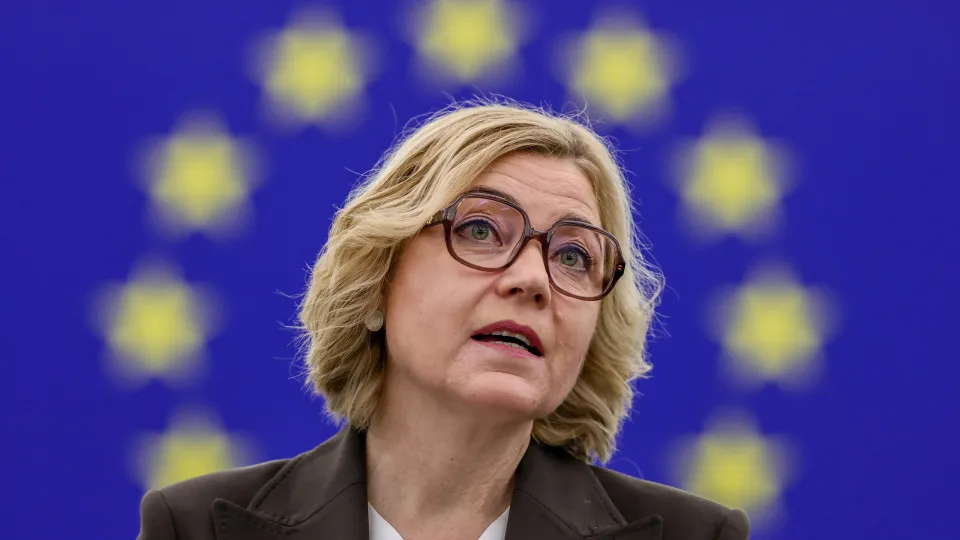
During a press conference in Brasília, held after the signing of a Digital Partnership between the European Union and Brazil at the Ministry of Foreign Affairs, Henna Virkkunen stated that, in the search for greater technological independence, Europe intends to work in cooperation with reliable partners to ensure resilience in supply chains and maintain complete freedom of choice about with whom and in what way to operate.
The signing of the partnership takes place in a complex geopolitical context, in which the European bloc is looking for alternatives to reduce its technological dependence in the face of growing rivalry between China and the United States.
“Because we see that those who hold power in these technologies dominate not only the economy, but also the world”, stated Virkkunen when asked by the Lusa agency about the scenario of dispute between the two powers.
According to the European representative, there is a strong relationship between technology and security.
“There is a strong connection between technology and security, for example. Therefore, it is important for Europe to avoid this type of dependence”, he highlighted.
She added that Europe has always been open to global investment and business, but that the current scenario requires more caution.
“We have always been very open to global investment and business, but now we realize that this global supply chain can, in some cases, be used as a weapon against us if we are overly dependent on a single company or country,” he said.
The new agreement foresees the expansion of cooperation in areas such as artificial intelligence governance, digital public infrastructure, connectivity, data protection, semiconductors, technological innovation, high-performance computing, protection of children and adolescents on the internet and digital governance.
The partnership also includes initiatives to more effectively address systemic risks that affect children and adolescents, such as exposure to harmful or inappropriate content and the exploitation of their vulnerabilities.
The event, held at the Itamaraty Palace, was attended by the Minister of Management and Innovation in Public Services, Esther Dweck.
At the opening of the ceremony, Henna Virkkunen declared that the European Union and Brazil have chosen to act as reliable partners at a time when technology exerts increasing influence over economic and geopolitical power.
According to her, for Europe, technological sovereignty does not mean protectionism or isolation.
“It’s about strengthening our ability to innovate, compete and make our own choices, while remaining open to the world,” he said.
Virkkunen also reinforced the importance of cooperation between strategic partners, highlighting that no country can prosper alone in the digital era.
“Artificial intelligence, semiconductors, connectivity, cloud infrastructure and cybersecurity depend on international cooperation, resilient supply chains and shared standards,” he declared.
In this context, she stated that Brazil emerges as “a fundamental partner in this effort”.
“As one of the largest digital economies in the world and an increasingly relevant voice in global discussions about technology, Brazil has a central role in defining the technologies of the future”, he concluded.
With the signing of the agreement, Brazil joins the European Union’s group of digital partners, alongside Japan, South Korea, Singapore and Canada.
On Thursday, in an exclusive interview with Lusa, the vice-president of the Republic, Geraldo Alckmin, stated that Brazil “changes its status in relation to the European Union” with the formalization of the partnership.
After meeting with Henna Virkkunen, Alckmin highlighted the country’s potential to attract investment in data centers, driven by the wide supply of renewable energy.
“What limits data centers around the world today is the lack of energy, and we have abundant energy, as well as renewable energy,” he stated.
Source: www.noticiasaominuto.com.br
Source link