Computer Sticker
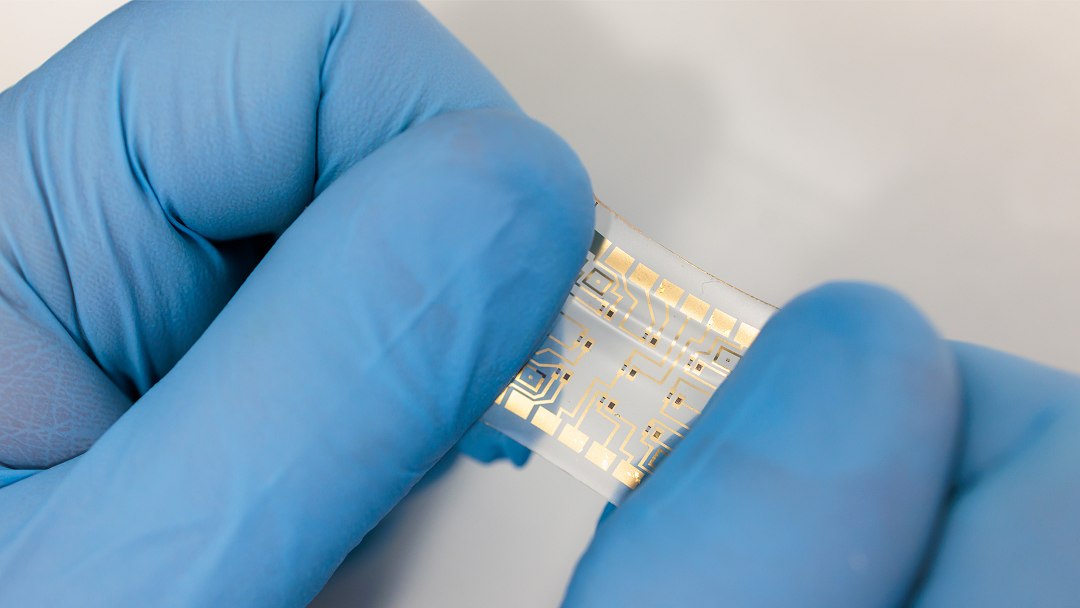
A new smart patch, designed to mimic the texture of human skin, can analyze health data using artificial intelligence in a groundbreaking way: Unlike current wearable devices, it performs its AI calculations directly on the body in mere milliseconds, without relying on a wireless connection.
Compare this to your smartwatch: Although it monitors your heart rate or movements, it doesn’t analyze the collected data; the analysis happens on much larger equipment, after the information is sent to an external server. In some more delicate medical situations – such as detecting ventricular fibrillation, for example – this small delay in communication with the server is very long.
Manufacturing processes that allow the printing of organic electrochemical transistors onto flexible surfaces have now made it possible to integrate computing power into a simple adhesive patch that can be applied to the skin.
“The future we are trying to create is one of making wearable and implantable devices smarter,” said Sihong Wang of the University of Chicago in the US. “It’s about helping people have a personal, instant doctor integrated into their devices.”
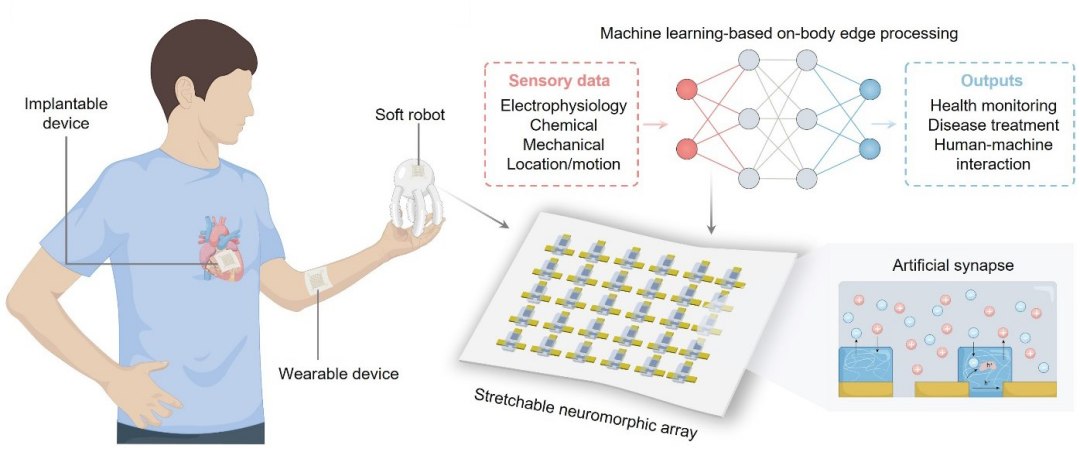
[Image: Songsong Li et al. – 10.1038/s41928-026-01639-8]
IA no hardware
The device consists of a flexible neuromorphic computational circuit, a large array of transistors capable of performing health data analysis by mimicking the workings of the human brain. The basic principle had already been demonstrated with a small number of transistors, but never on this scale, which has reached a size sufficient for practical use.
Organic electrochemical transistors , also known as neurotransistors , function differently from the transistors in computer chips. They process information using both electrical current and the movement of ions through a gel-like layer of electrolyte. The electrolytes give each transistor a built-in memory, allowing them to stably store numerical values over time, similar to how a synapse in the brain can be strengthened or weakened to encode a learned pattern.
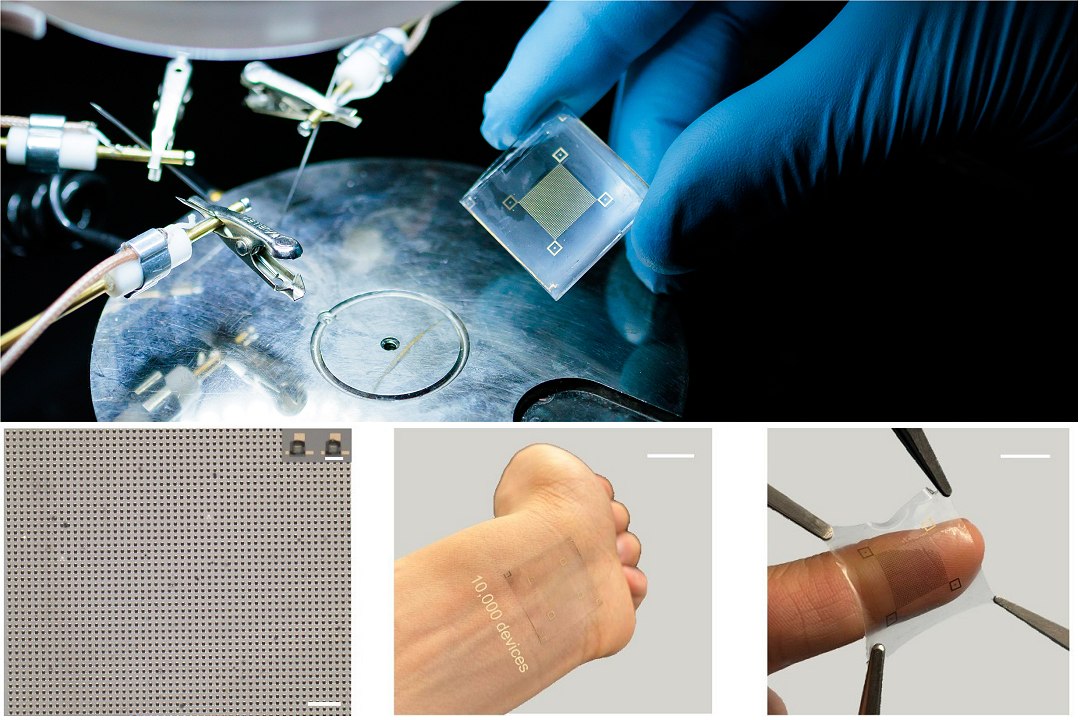
[Image: John Zich/UChicago] Physical
Defibrillation without a defibrillator
To test the usefulness of the new devices, the team used one of its flexible arrays to run a pre-trained algorithm designed to assist in the treatment of ventricular fibrillation. This dangerous electrical storm in the heart can be fatal and is most often treated with a defibrillator shock, which delivers a massive electrical discharge throughout the heart.
The researchers proposed a more precise treatment: Mapping the abnormal electrical waves as they propagate through the heart, and then applying small, precise pulses just ahead of them, so as to cancel them out before they can propagate. The challenge is great: The wavefronts move through the heart so rapidly that the entire analysis needs to be completed in milliseconds, too fast for the data to be transmitted to an external computer and back.
Using real cardiac mapping data from a donated human heart, the team demonstrated that the stretchable array can pinpoint wavefront positions with 99.6% accuracy, even when the device was stretched to more than one and a half times its normal length.
In another demonstration, a neural network encoded in the matrix analyzed a combination of vital signs and personal health data—including cholesterol levels, blood sugar, maximum heart rate, and ECG readings—to assess a patient’s risk of heart attack, achieving an accuracy of 83.5%.
Source: www.inovacaotecnologica.com.br
Source link