In the early hours of April 1st, as the Orion spacecraft left Florida heading to the Moon, an electronic notification landed in the inbox of engineer Rodrigo Trevisan Okamoto, in São Paulo. The message, sent by NASA, confirmed what he and the team at startup Condor Instruments had been hoping for almost three years: the actigraph they developed was on board the most important manned flight since Apollo.
“It was a complete surprise. Only after the mission was over did we discover that the astronauts had already been using the equipment in secret tests for the previous two years”, says Okamoto, co-founder of the company that was created with support from the PIPE-FAPESP program, to Fapesp Agency.
“Clock” has much more complete functions
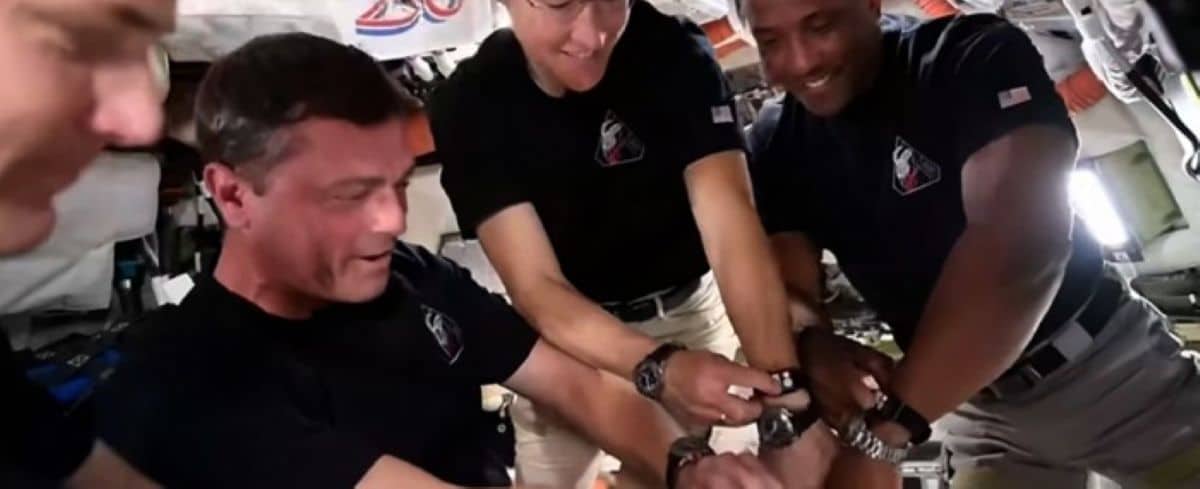
The device looks like a common sports watch, but its function is much more sophisticated. It carries accelerometers and sensors capable of measuring light at different wavelengths and also skin temperature. The combination of this information makes it possible to reconstruct the user’s sleep and wake cycle with millimeter precision.
In space, this capability is vital. Every 90 minutes, the International Space Station witnesses a sunrise and sunset. Inside the Orion capsule, the confusion between day and night is total, and the astronauts’ biological clock loses its references. The result is sleep deprivation, cognitive impairment and operational risks.
“Chronobiology was born funded by NASA, precisely because of the need to understand how the astronaut sleeps up there”, recalls Mario Pedrazzoli Neto, a professor at USP who coordinated the studies that gave rise to the technology.
Why Brazilians are different
There are actigraphs on the international market, but the Brazilian one has three differences that caught the attention of the American agency. First, it simultaneously monitors movement, light, and skin temperature — the three variables central to understanding sleep. Second, it measures so-called melanopic light, the cyan-blue spectrum emitted by cell phone screens that inhibits melatonin production. Third, there is an event button that astronauts activate at historic moments — such as the record distance of 406,777 km from Earth, achieved on April 6.
“Phones emit light precisely at this wavelength. Therefore, using a cell phone at night messes with the brain”, warns Pedrazzoli.
How did it start?
The journey began in the 2000s, when Pedrazzoli needed reliable equipment to study the impact of daylight saving time on the population. At the time, there was no national product. He then teamed up with Okamoto and Luis Filipe Rossi, engineers at Poli-USP, and the three decided to create their own solution. PIPE-FAPESP provided the initial impetus.
“Without this support at the beginning, when the risk is higher and private capital does not appear, we would not have left the prototype”, says Okamoto.
Today, Condor Instruments exports between 200 and 300 actigraphs per month to more than 40 countries. The device is used in research on myopia in Asia, recovering premature babies in ICUs and even in studies on the brains of astronauts.
For NASA, the objective of the Archer project — of which the Brazilian actigrapher is part — is clear: to understand how to keep humans healthy and alert on journeys lasting months or years in deep space. The data collected on Artemis 2 will be compared with motor coordination tests and questionnaires answered before and after the flight. The goal is for the learnings to be used for missions that will take humans to Mars.
Continues after advertising
“What we learn will help us understand how astronauts can survive and thrive further away from Earth,” summarizes NASA on its website.
Condor Instruments watch Image:Disclosure/CondorInstruments
The next challenge
Now, Condor Instruments is racing to remain as a supplier to the agency in the next stages of the Artemis program, which foresees a manned landing on the Moon’s south pole in 2028. “We will do everything we can to continue,” says Okamoto. For Rodolfo Azevedo, coordinator of FAPESP’s innovation area, the case is an example of how bench science can transform into technological sovereignty.
“Between the first prototypes and the announcement that a Brazilian technology is monitoring astronauts in deep space, there was a long journey of refinement,” says Azevedo. “Disruptive innovation requires strategic patience.”
Source: www.bing.com
Source link