Turning technology investment into mission impact
At this year’s National Laboratories Information Technology (NLIT) Summit, Dell Technologies engaged federal leaders across the Department of Energy ecosystem to address a shared challenge: how to translate rapidly advancing technology into reliable, scalable mission outcomes.
NLIT continues to serve as a forum where IT, security and research leaders align on the future of infrastructure, cybersecurity and AI. Across conversations and technical sessions, one reality was clear: the pace of change is accelerating, and infrastructure decisions made today must support what comes next. That includes planning for workloads, data growth and power requirements that will look very different in just a few years.
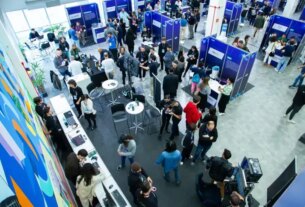
Dell’s presence, spanning an interactive booth and mobile showcase, focused on how organizations can connect emerging technologies such as AI and advanced analytics to practical deployment strategies across edge, core and cloud environments.
Designing infrastructure that scales with innovation
In one breakout session, Michael Levecki, a data center account executive with Dell Federal, described a key shift reshaping national labs and research institutions. Infrastructure is no longer static. It must evolve continuously alongside workloads and data growth.
“Data must be treated as a product, not a byproduct,” Levecki said, emphasizing the need for intentional data architecture that is governed, accessible and performs at scale.
The discussion focused on how modern environments are being built with:
-
-
-
- Hybrid and consumption-based models that allow flexibility between on premises and cloud environments
-
- Automated provisioning and DevOps pipelines to accelerate deployment
-
- Scalable compute architectures that support both traditional HPC and AI workloads
-
- Infrastructure designed to handle increasing power density and cooling requirements
-
-
These shifts require a more deliberate approach to architecture, where infrastructure decisions account for both current performance and future adaptability.
For organizations planning forward, the takeaway is clear. Infrastructure must be designed with change in mind, enabling flexibility across silicon platforms while avoiding costly full-system redesigns.
Equally important is timing. “The organizations that engage early are the ones best positioned to scale successfully,” Levecki noted.
From experimentation to operational AI
A second breakout session led by Andrew Meinecke, the vertical solutions director for AI at Dell Federal, demonstrated how AI is transitioning from experimentation to operational capability.
Using the Dell Pro Max with GB10, the session showcased how organizations can run multiple models locally on secure, on-prem infrastructure and orchestrate AI agents to solve complex problems in real time.
The demonstration illustrated how AI can be applied to cybersecurity operations, including the ability to:
-
-
-
- Identify abnormal patterns across a network
-
- Correlate signals from multiple data sources
-
- Recommend or automate responses in seconds
-
-
“This is a paradigm shift,” Meinecke said, noting the increasing speed and scale at which AI can operate at the deskside.
Beyond cybersecurity, the session highlighted additional applications relevant to research and mission environments, including:
-
-
-
- Sensor data fusion for real-time insights
-
- Autonomous systems coordination
-
- Distributed AI at the edge
-
- Multi-model orchestration for complex workflows
-
-
As AI transitions quickly from proof of concept to production, organizations need infrastructure that is secure, transparent and cost-efficient, particularly for sensitive workloads.
Preparing for what comes next
Across NLIT, one message stood out: the conversation has shifted from whether to adopt AI and advanced computing to how to deploy it effectively at scale.
That shift puts greater focus on infrastructure decisions, prioritizing flexibility, scalability and alignment with mission needs.
Federal agencies and research institutions that take a deliberate, architecture-first approach today will be better positioned to support the next wave of scientific discovery, security innovation and data-driven operations. Read more here about the Dell AI Advantage.
Looking ahead: Continuing the conversation at PEARC
Many of the themes highlighted at NLIT, including advancing AI workloads and modernizing research and data infrastructure, will continue to evolve across the research computing community.
We’re looking forward to continuing these conversations at the Practice & Experience in Advanced Research Computing (PEARC) Conference, taking place July 26–30, 2026 in Minneapolis, MN.
Dell will be onsite with a booth at this year’s event, and we welcome the opportunity to connect, share insights and explore how organizations are turning these ideas into action.
To learn more about PEARC or to register, visit the official site here.
Dell reported this
Source: www.dell.com
Source link