The Samsung is facing one of the most serious labor conflicts in its history, and the global memory market is observing the situation with increasing apprehension.
The company’s workers’ union announced an 18-day strike, scheduled to begin in May 21which could interrupt production at the world’s largest memory chip manufacturer and generate losses estimated at 30 trillion won, equivalent to about US$20 billion (approximately R$99.6 billion at the current exchange rate, without considering exchange rate variations).
What workers demand
At the heart of the conflict is variable remuneration. The union, which represents around 74,000 workers and recently achieved majority representation status, requires that the Samsung destination 15% of annual operating profit to the payment of bonuses, in addition to a 7% salary adjustment and the extinction of the current cap that limits the performance bonus to 50% of the annual base salary.
Alert on
Samsung and Kingston SSDs will increase by more than 10%
The demand for the bonus is equivalent to approximately US$30 billion (around R$149.4 billion), based on the company’s projected operating profit.
The operating profit of the Samsung in the first quarter of 2026 grew 755% compared to the same period of the previous year driven by explosive demand for memory chips for artificial intelligence applications.
The union points out its rival SK Hynix as a reference. The company removed the bonus cap last September and promised to allocate 10% of operating profit to dividends.
With a projected profit of 250 trillion won in 2026, SK Hynix is expected to pay average bonuses of around 700 million won per employee (approximately US$400,000, or R$2 million).
According to calculations by the union itself, Samsung the bonuses paid to workers in the company’s chip division are less than a third of the values charged by the competitor.
The union president, Choi Seung-horevealed that more than 200 employees from the semiconductor division migrated to SK Hynix in the last four months, a concrete sign that the wage gap is already having operational consequences.
Demonstration in Pyeongtaek and immediate drop in production
On April 23, the union held a large protest on the campus of Pyeongtaekthe main memory production hub in Samsung in Gyeonggi, South Korea.
Police estimated the presence of around 30,000 people; the union claims that the number reached 40,000 participants representing approximately one-third of the workforce at the company’s semiconductor factories.

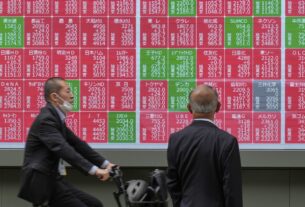
The effects were immediate: according to union data cited by Seoul Economic Daily, memory fab production fell 18.4% and the casting lines fell 58.1% during the night shift after the protest. The numbers only refer to one day’s action; a formal and prolonged strike would have a much deeper impact.
“This strike issue will serve as a key variable that will deepen supply shortages amid already tight memory conditions and further intensify upward pressure on prices.”
Kim Dong-won head of research at KB Investment & Securities
Why 18 days can turn into 36
The most worrying aspect for the global supply chain is not the formal duration of the strike, but the recovery time.
When routine configuration and maintenance activities for semiconductor equipment are interrupted for prolonged periods, a return to normal production often takes double the downtime.
Thus, an 18-day strike could result in more than 36 days without full production that is, more than a month of effective impact on supply.
The products most susceptible to this scenario are High-performance DRAM for servers and the Enterprise SSDs (eSSD) precisely the segments with the greatest demand due to the accelerated expansion of AI Data Centers.
The Samsung also signaled that, in this context, it will only comply with requests already signed for LPDDR4 without accepting new orders for this type of memory.
Global impact on the semiconductor chain
Samsung holds approximately 40% of the global DRAM market and about 30% of the NAND flash market. A production interruption on this scale would not be restricted to South Korea.
Industry analysts estimate that a strike could reduce global DRAM supply by 3% to 4% and NAND in 2% to 3%at a time when prices are already on a consistent upward trajectory.

According to TrendForce DRAM prices are expected to continue rising in the second quarter of 2026, and a strike would further increase this pressure. PC manufacturers have already reacted to the scenario: according to DigiTimes some automakers have increased their component inventories by up to 50% as a preventive measure.
TV manufacturers warn that a possible doubling in memory costs would have a direct impact on final consumer prices.
SK Hynix and Micron could absorb some of the unmet demand for Samsung but analysts are cautious: the idle capacity of these companies would not be enough to offset the volume that Samsung represents in the global market.
Negotiations stalled, deadline approaches
Samsung management has publicly committed to seeking quick deals, but rejected scrapping the bonus cap. The central point of union demands. The talks remain at an impasse, and the deadline for May 21 approaches without concrete signs of progress.
The company also resorts to the judicial system in parallel with the negotiations, which further intensifies the climate between the parties. In 2024, the Samsung faced its first strike in history, with the July strike lasting three days before being extended indefinitely, but with participation from just 15% of union members.
This time, the projected numbers are 30% to 40% of total membership, making the potential impact incomparable to the previous episode.
Salary as a systemic risk
The dispute between the Samsung and its workers transcend the factory gates in Pyeongtaek.
With 70% of high-performance memory chips produced worldwide consumed by Data Centers AI any material disruption in the supply chain quickly reaches Silicon Valley, server assemblers and end consumers.
What began as a fierce salary negotiation became a macroeconomic variable with the capacity to pressure prices, delay products and reorganize contracts on a global scale.
Analysts still see room for an agreement before May, but the willingness of the company’s management Samsung in yielding, so far, is none.
Sources): WCCFTech

Microsoft offers voluntary retirement plan to more than 8,000 employees.
Source: www.adrenaline.com.br
Source link