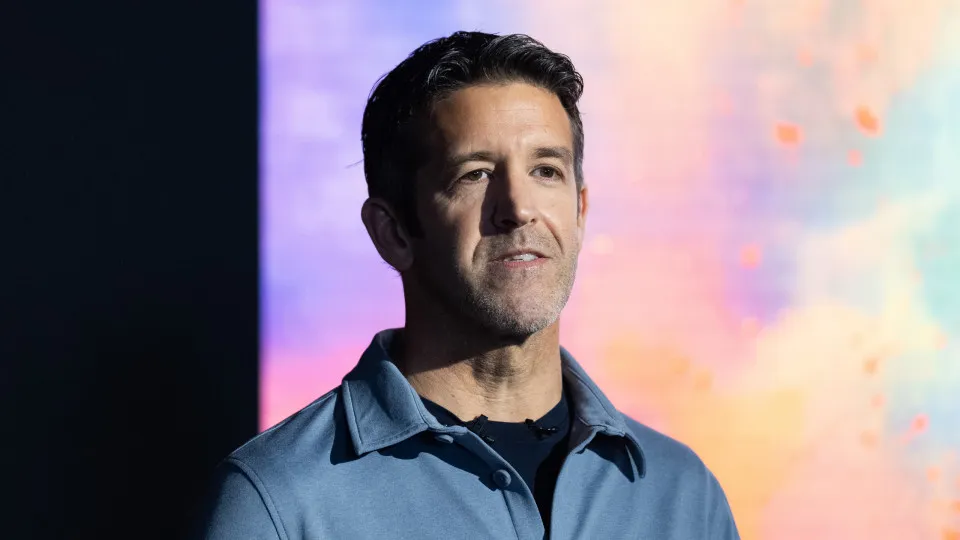
Apple announced this Monday (20) that executive John Ternus will be the company’s next CEO. The veteran hardware chief will lead the company as the iPhone maker prepares for industry-wide changes driven by AI.
Ternus will take over as CEO of Apple on September 1, succeeding Tim Cook – who has led Apple since 2011 and will become executive chairman of the board. At 50, Ternus will become CEO at the same age Cook was when he took over from co-founder Steve Jobs in 2011.
He will also join the company’s board of directors.
Ternus, a California native, joined Apple’s product design team in 2001 and became vice president of hardware engineering in 2013. He joined the company’s executive team in 2021, when he assumed his current role as senior vice president of hardware engineering, reporting to Cook.
Before Apple, Ternus worked as a mechanical engineer at Virtual Research Systems. He earned a degree in mechanical engineering from the University of Pennsylvania, where he was on the swim team. For his senior project, he designed a device that allowed quadriplegics to use head movements to control a mechanical feeding arm.
CAREFUL AND DISCREET
Ternus has overseen some of Apple’s most important hardware bets in recent years, including the teams responsible for the iPhone, iPad, Mac, Apple Watch and AirPods.
He played a key role in reviving sales of products like Apple’s Mac computers, which have gained market share in recent years. It also most recently introduced the iPhone Air last year, the biggest redesign of the iPhone since 2017.
Around 2018, Apple considered adding a small laser to its iPhones. The component would allow consumers to take better photos, map their surroundings more accurately, and use new augmented reality features. But it would also cost Apple about $40 per device, cutting into the company’s profits.
It was Ternus who suggested adding the component only to the most expensive iPhone models, two people familiar with the discussions told the New York Times. These devices, Ternus argued at the time, tended to be purchased by Apple’s most loyal customers, who would be excited about the new technology. Ordinary consumers, on the other hand, probably wouldn’t care.
Finding the balance between adding new features to Apple products while managing the bottom line has defined Ternus’ careful, understated style, known for his attention to detail and his knowledge of Apple’s vast network of suppliers – characteristics that have also defined Cook’s management style.
Both are also considered balanced collaborators, capable of navigating the bureaucracy of one of the richest companies in the world without creating friction. “If you want to make an iPhone every year, Ternus is your guy,” said Cameron Rogers, who worked in product and software engineering management at Apple from 2005 to 2022.
TRAJECTORY AT APPLE
Ternus is the first Apple CEO in three decades to have spent his career working on hardware. Unlike some of the other candidates to replace Cook, he has worked on many of Apple’s devices, as well as the global operations that make those products.
However, he assumes as a relative unknown outside the company. Internally, he is better known for maintaining products than developing new ones, according to six former employees. And Ternus, who has been an engineer in Silicon Valley his entire adult life, has limited exposure to the political issues and responsibilities associated with Apple’s top job.
In the four years after graduating in 1997, he designed headsets and other products at a virtual reality startup. He then joined Apple, working first on displays for Macs as the company transitioned from the colorful iMacs of the late 1990s.
In about three years, he became a manager, said Steve Siefert, Ternus’ first boss at Apple. During this time, the team changed floors, moving from a closed office to a mostly open layout with a few offices. When he was promoted, Ternus had the option of moving to one of these offices, but he declined.
Ternus was “a man of the people,” Siefert said, adding that the decision to sit down with his team likely helped Ternus manage and motivate his team. When Siefert retired in 2011, freeing up his office, Ternus once again said he wanted to remain in the open space.
In 2005, Ternus had been promoted to lead Apple’s hardware engineering team for iMacs as it developed the G5 series, said Michael D. Hillman, who helped hire Ternus and worked with him at Apple for more than a decade.
Ternus spent extended periods working with manufacturers in Asia, Hillman said. The executive traveled between the continent and Silicon Valley and learned how difficult it could be to get a manufacturing supplier to deliver to Apple’s design expectations. Apple also placed Ternus with an outside consultant to advise him on leadership.
Ternus became a key lieutenant to Dan Riccio, his predecessor as Apple’s hardware chief. By 2013, Ternus’ role had expanded to include oversight of the Mac and iPad teams.
In recent years, he has taken on more responsibility for updates to Apple products. He spearheaded the iPhone Air, launched last year with a slim new design, and was a key leader in Apple’s transition from using Intel chips in Macs to using the company’s own chips in 2020. Ternus was also involved in Apple’s experimentation with foldable phones, according to one of the people close to the company.
“Ternus’ promotion indicates that the company will focus on new hardware devices such as foldable cell phones, glasses, virtual reality devices and AI pins,” said Gil Luria, managing director of DA Davidson & Co.
Source: www.noticiasaominuto.com.br
Source link